

Trademark Class 34 covers tobacco-related goods, including cigarettes, cigars, electronic cigarettes, smoking papers, pipes, lighters, and related accessories. It helps businesses secure their brand names, logos, and labels in this space. In India, Class 34 operates under the Trade Marks Act, 1999.
By registering under Class 34, businesses can prevent misuse, copying, and market confusion. A strong brand identity becomes even more critical in regulated industries like tobacco and smoking products.
Key Takeaways
- Class 34 covers tobacco products, cigarettes, cigars, smoking papers, e-cigarettes, pipes, lighters, ashtrays, and related smoking accessories.
- E-cigarettes and vaporizers remain part of Class 34’s goods list, but their manufacture, sale, and distribution are banned in India under the Prohibition of Electronic Cigarettes Act, 2019. Brands can still register trademarks for protection or international use.
- It does not cover medicinal nicotine products (Class 5), e-cigarette batteries and chargers (Class 9), or vehicle-specific ashtrays (Class 12).
- Filing costs ₹4,500 per class for individuals, and ₹9,000 per class for companies and other entities.
- Validity runs 10 years, renewable through timely trademark renewal.
- Philip Morris International registers traditional cigarettes under Class 34 and its IQOS electronic devices under Class 9, illustrating a common multi-class strategy in this industry.
What is a Class 34 Trademark in India?
A Class 34 trademark applies to tobacco products and smoking articles. It protects a brand’s name, logo, and visual identity. It does not protect the product’s manufacturing process, blend, or formula. Trademark Class 34 is recognized globally under the Nice Classification system, which organizes trademark categories worldwide.
This distinction is important because product formulations fall outside trademark registration. The brand identity consumers recognize on the packaging is what the trademark protects.
Who Can File for Trademark Class 34 Protection?
Any individual or business dealing with tobacco or smoking products can apply. Manufacturers, wholesalers, exporters, retailers, and brand owners qualify under this class. Startups can also apply before launch by filing on a “proposed to be used” basis. You should file under Class 34 if you sell or plan to sell:
- Cigarettes, cigars, or cigarillos under a brand name.
- Tobacco or tobacco substitutes not meant for medical use.
- Electronic cigarettes or oral vaporizers for smokers.
- Smoking accessories like pipes, lighters, or ashtrays.
Early filing reduces conflict risks and protects ownership before market exposure..
What Products Does Trademark Class 34 Cover?
The Class 34 goods list includes all tobacco products and smoker-related accessories, ensuring businesses protect every product sold under their tobacco brand:
| Category | Products Included Under Class 34 |
|---|---|
| Tobacco Products | Tobacco, chewing tobacco, snuff |
| Cigarettes | Cigarettes, cigarettes with tobacco substitutes, cigarette tips |
| Cigars | Cigars, cigarillos |
| Smoking Papers | Cigarette paper, books of cigarette papers |
| Electronic Smoking | Electronic cigarettes, oral vaporizers for smokers |
| E-Liquids & Flavourings | Nicotine liquid solutions and flavouring liquids not derived from essential oils |
| Smoking Herbs | Herbs for smoking |
| Pipes & Holders | Tobacco pipes, cigarette holders, cigar holders |
| Pipe Accessories | Pipe cleaners, pipe racks |
| Storage Containers | Tobacco jars, tobacco pouches, cigar cases, humidors |
| Smoking Tools | Cigarette cases, cigar cutters |
| Lighting Items | Matches, matchboxes, match holders |
| Lighters & Parts | Lighters, gas containers, lighter wicks |
| Waste Accessories | Ashtrays for smokers, spittoons |
| Rolling Accessories | Pocket machines for rolling cigarettes |
| Hookah Products | Hookahs |
| Mouthpieces | Mouthpieces for cigarette holders |
| Decorative Tips | Amber tips for cigar and cigarette holders |
Note: The “E-Liquids & Flavourings” row’s wording has been clarified above for readability; the underlying category itself is unchanged.
Which Products are Not a Part of Trademark Class 34?
Some related products do not fall under Class 34 protection. Filing excluded goods incorrectly often causes objections or delayed registration. Class 34 does not include:
- Tobacco-free cigarettes for medical purposes fall under Class 5.
- Batteries and chargers for electronic cigarettes, which fall under Class 9.
- Ashtrays designed specifically for automobiles, which fall under Class 12.
Understanding exclusions ensures accurate filing and stronger compliance with trademark law.
How to Register Your Trademark in Class 34?
Trademark Class 34 registration helps businesses protect brands used for tobacco products, smoking articles, and related goods. A clear process helps new and established businesses secure protection for their brands.
Follow these steps to register a trademark under Class 34:
- Search first: Check whether your trademark is unique using the IP India database or RegisterKaro’s trademark availability search tool. Look for existing Class 34 marks, phonetic similarities, and pending applications.
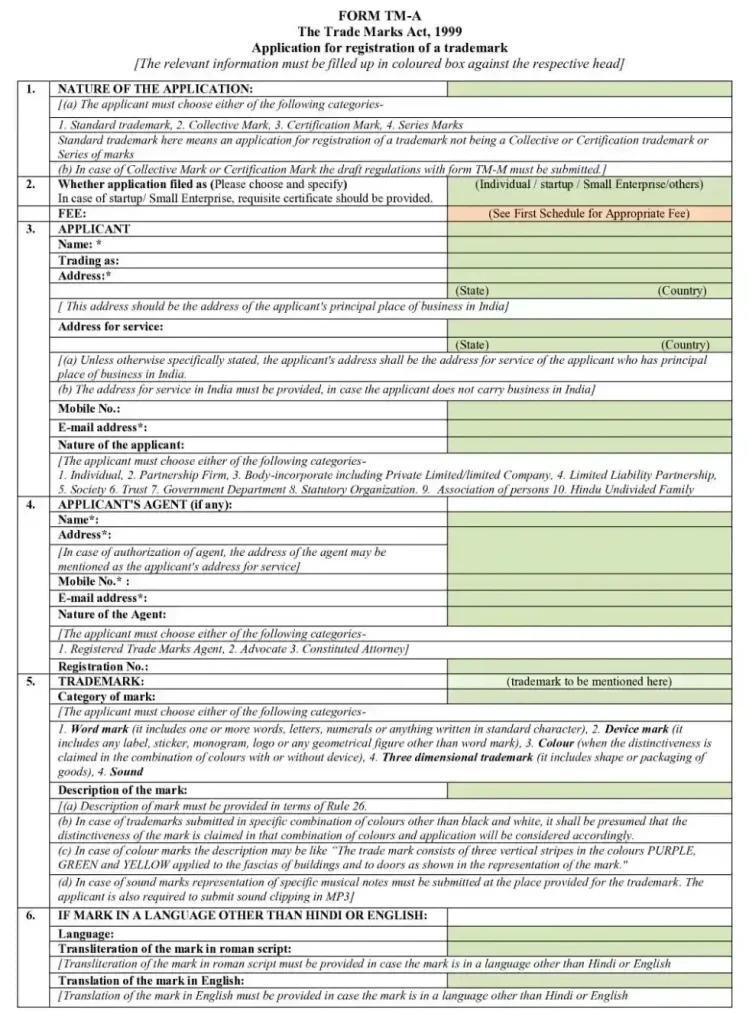
- Prepare and file Form TM-A: Include applicant details, trademark type, and a clear logo or wordmark in JPEG format. Add an accurate description of your Class 34 products, the date of first use if applicable, and a Power of Attorney if filing through an agent. Submit the application online through the IP India Trademark E-Filing Portal. The government fee is ₹4,500 for individuals and ₹9,000 for others.
- Examination: The examiner checks the mark for distinctiveness and similarity with existing trademarks. Objections may arise under Section 9 for lack of distinctiveness or Section 11 for similarity with prior marks. Respond to trademark objections within 30 days to prevent abandonment. The registry may also schedule a trademark hearing if objections remain unresolved.
- Publication and opposition window: Once cleared, the registry publishes the mark in the Trademark Journal. Third parties can challenge the trademark during the four-month opposition period.
- Registration and renewal: The registry issues a certificate granting exclusive rights. You can then use the ® symbol. Registration remains valid for 10 years, and timely trademark renewal ensures continuous protection.
Which Other Trademark Classes Create Confusion With Class 34?
Applicants often confuse Class 34 with other classes because tobacco products can overlap with devices and health-related products. The correct class depends on the product’s purpose and use.
- Class 5: Covers medicinal or therapeutic nicotine products for health or treatment. Businesses selling nicotine gums, patches, or medical cessation products must file under Class 5. Class 34 covers only tobacco substitutes not intended for medical use.
- Class 9: Covers electronic devices, batteries, chargers, and software-based products. E-cigarette devices, chargers, and electronic components fall under Class 9. Class 34 covers e-cigarettes and vaporizers as smoking articles, not electronic components.
- Class 12: Covers vehicle and automobile accessories. Ashtrays designed for cars fall under Class 12. Regular smoker ashtrays without a vehicle-specific design stay in Class 34.
Note: Class 34 includes e-cigarettes and vaporizers. However, India bans their manufacture and distribution under the Prohibition of Electronic Cigarettes (Production, Manufacture, Import, Export, Transport, Sale, Distribution, Storage and Advertisement) Act, 2019. Businesses can still register trademarks for brand protection or international use.
Many businesses file multiple trademark applications to protect different product categories. Philip Morris International, for example, registers traditional cigarettes under Class 34 and its IQOS electronic devices under Class 9. This protects both physical products and devices.
