Section 8 Company Registration in Mumbai
Register your Section 8 Company in Mumbai with RegisterKaro. We support NGOs and nonprofits across Mumbai, from MCA licensing to ROC compliance.
 MCA License Application & Section 8 Incorporation via SPICe+12A, 80G, and CSR-1 Registration SupportFCRA Registration Guidance for Foreign FundingROC Jurisdiction Mapping Under ROC Mumbai-ICompliance Under the Maharashtra Shops & Establishments Act, 1948

 What Sets Us ApartWhat Sets Us Apart
What is a Section 8 Company in Mumbai?
A Section 8 Company in Mumbai is a not-for-profit organization registered under Section 8 of the Companies Act, 2013. The Ministry of Corporate Affairs (MCA) governs Section 8 Companies, making them a legally recognized non-profit structure in India. Unlike a trust or society, a Section 8 Company carries stronger institutional credibility with donors and funding bodies.
Mumbai-based organizations that commonly opt for Section 8 Company registration include:
- Foundations addressing urban poverty and clean drinking water access in densely populated settlements like Dharavi and Govandi.
- Education-focused NGOs running learning programs in low-income settlements across Kurla, Mankhurd, and Vikhroli.
- Environmental non-profits tackling Mumbai's rapid loss of mangrove cover, coastal degradation, and annual monsoon flooding.
- Healthcare organizations delivering medical services to daily-wage workers and migrant communities in Wadala and Bhiwandi.
- Women's empowerment groups are engaging with Maharashtra's Department of Women and Child Development on skilling, livelihood, and welfare programs.
Section 8 Company Registration gives non-profits the legal foundation they need to qualify for government grants and tap into CSR funding pools.
Regulatory Authorities Governing Section 8 Companies in Mumbai
Running a Section 8 Company in Mumbai means staying accountable to multiple regulatory bodies, covering incorporation, taxation, and foreign funding. Here is a breakdown of each authority and what it oversees:
- Registrar of Companies (ROC), Mumbai-I, Mumbai-II, Pune, and Nagpur: The primary bodies for incorporation and statutory compliance in Maharashtra. Effective 16 February 2026, the MCA reorganized the state's ROC structure into four offices. ROC Mumbai-I, ROC Mumbai-II, ROC Pune, and ROC Nagpur. All four handle SPICe+ filings, AOC-4, MGT-7, and Section 8 compliance.
- Regional Director (RD), Western Region-I, Mumbai: Oversees ROC Mumbai-I and ROC Mumbai-II and processes special approvals. This includes alterations to the Memorandum of Association, conversion to another entity type, and shifting of a registered office across ROC boundaries within Maharashtra.
- Income Tax Department: Administers direct taxes for Mumbai-based Section 8 Companies. Section 12AB registration grants the organization tax exemption on income applied toward charitable objectives. Section 80G registration allows donors to claim a 50% tax deduction on their contributions under the Income Tax Act, 1961.
- Charity Commissioner, Maharashtra: Governs public charitable trusts and societies under the Maharashtra Public Trusts Act, 1950. Section 8 Companies fall exclusively under the MCA and the Companies Act, 2013, not under the Charity Commissioner's jurisdiction. However, Mumbai-based Section 8 Companies may interact with this office when applying for state-specific property exemptions or local municipal benefits.
- Reserve Bank of India (RBI): The RBI ensures compliance with the Foreign Exchange Management Act (FEMA). It also monitors all cross-border financial transactions and foreign grants received by Mumbai-based Section 8 Companies.
- Ministry of Home Affairs (MHA): Any Mumbai-based Section 8 Company planning to receive foreign donations must obtain FCRA registration. Ongoing compliance with the Foreign Contribution (Regulation) Act, 2010 runs through the MHA portal (mha.gov.in).
Why Register a Section 8 Company in Mumbai?
Here is why registering a Section 8 Company in Mumbai puts your organization in the strongest possible position to raise funds and deliver impact:
- India's Undisputed CSR Capital: Maharashtra consistently leads all Indian states in CSR spending. Section 8 Companies win these partnerships because of their audit-ready structure and mandatory Companies Act, 2013 compliance.
- Stronger Funder Trust: Mumbai's corporates, consulates, and institutional donors prefer Section 8 Companies over unregistered NGOs. Their mandatory audits, board governance, and MCA filings improve transparency, directly boosting approval rates for grants and partnerships.
- Environmental Crisis Creates Demand: Mumbai's AQI ran consistently higher in early 2026, with more days in the Unhealthy category than the year before. Meanwhile, proposed road projects threaten over 45,000 mangrove trees along the western coastline. Section 8 Companies working on air quality, mangrove conservation, and coastal resilience attract continuous project demand from the BMC and CSR-backed initiatives.
- MMR Expansion Without Extra Registration: A Mumbai-registered Section 8 Company can operate across the entire Mumbai Metropolitan Region without separate registrations. This includes areas under nine municipal corporations, such as Thane, Navi Mumbai, Kalyan-Dombivali, and Bhiwandi-Nizampur.
- Strong Education and Skilling Ecosystem: Mumbai hosts IIT Bombay, TISS, and Mumbai University's wide college network. Section 8 Companies plug directly into this ecosystem for community skilling and internship-led projects.
- Consistent Demand for Social Work: Mumbai’s SRA manages redevelopment in Dharavi and Mankhurd, while M-East remains one of the city’s most underserved wards. This creates steady demand for Section 8 Companies that can deliver scalable social programs.
Eligibility Criteria for Section 8 Company Registration in Mumbai
To register a Section 8 Company in Mumbai, your organization must satisfy the following conditions under the Companies Act, 2013:
| Criteria | Details |
| Minimum Members | At least 2 members for a private structure; at least 7 for a public structure. |
| Directors | A private company needs a minimum of 2 directors; a public company needs 3. One director must be an Indian resident who spent at least 182 days in India during the previous calendar year. |
| Charitable Purpose | The Memorandum of Association (MoA) and Articles of Association (AoA) must clearly spell out the organization's social mission, covering areas such as education, healthcare, environmental protection, or poverty alleviation. |
| Use of Surplus | The company must channel all income and surplus back into its stated mission. Paying out dividends or distributing profits to members is strictly prohibited. |
| Capital | No minimum paid-up capital is required. Members can contribute any amount as subscription money at incorporation. |
| Name | The name must drop "Limited" or "Private Limited." Acceptable suffixes include Foundation, Forum, Association, Federation, Chambers, Confederation, and Council. |
| Registered Office | The company must hold a valid registered office address in India from the day of incorporation. |
| Director Qualification | No director may carry a disqualification under Section 164 of the Companies Act, 2013, including bankruptcy, criminal conviction, or outstanding MCA filing defaults. |
| DSC and DIN | Every proposed director must obtain a DSC for MCA filings and a DIN for company incorporation. |
Documents Required for Section 8 Company Registration in Mumbai
The MCA requires the following documents before you begin filing your Section 8 Company application:
| Document | Details |
| Identity Proof | PAN Card or Driving License of all directors and members. |
| Address Proof (Identity-Linked) | Aadhaar Card, Passport, Voter ID (EPIC), or Driving License of all directors and members. |
| Current Residence Proof | A utility bill or bank statement not older than 2 months, confirming each director's present address. |
| Photographs | Recent passport-size photographs of all directors and members. |
| Registered Office Proof | Rent agreement or ownership proof with a utility bill and the owner’s NOC.
Mumbai applicants commonly use a BEST bill, MCGM water bill, or lease agreement as proof. |
| Declaration in Form INC-14 | A signed declaration from a practicing CA, CS, CMA, or Advocate confirming that the MoA and AoA meet all Section 8 requirements. |
| Projected Financials | A three-year projected income and expenditure statement covering expected grants, CSR funding, donations, program costs, and administrative expenses. |
Note: Foreign nationals from Hague Convention member countries must submit apostilled copies. Those from non-member countries must submit notarized and consulate-attested copies.
How to Register a Section 8 Company in Mumbai?
Follow these steps to complete your Section 8 Company registration through the MCA V3 portal:
Step 1: Get Your DSC and DIN in Place
Every proposed director needs a Class 3 Digital Signature Certificate (DSC) to sign e-forms on the MCA portal. Moreover, apply for a Director Identification Number (DIN) for up to three directors directly through SPICe+. For companies with more than three directors, the remaining directors must apply separately using Form DIR-3 on the MCA portal after incorporation. Each DIR-3 application must be digitally signed by the applicant and verified by a practicing CA, CS, or Cost Accountant before submission.
Step 2: Lock in Your Company Name
Choose a unique name that is not identical or deceptively similar to any existing registered company or trademark using RegisterKaro's company name search tool. Then file SPICe+ Part A on the MCA V3 portal to reserve your name. The name must reflect your social mission and carry a permitted suffix, like Foundation, Forum, or Electoral Trust.
Step 3: Prepare the MoA and AoA
Draft your MoA in Form INC-13. Spell out your charitable purpose clearly, whether it covers slum rehabilitation in Dharavi, coastal conservation in Versova, or skill-building across Mumbai's informal settlements. Then draft your AoA in Form INC-31 to define your organization's internal governance rules.
Step 4: Submit SPICe+ Part B
File the complete SPICe+ Part B form, which bundles incorporation, DIN allotment, PAN, TAN, EPFO, ESIC, and GST registration into a single submission. Attach your MoA, AoA, INC-14 declaration, three-year projected financials, and Mumbai registered office proof directly within the form on the MCA V3 portal.
Step 5: Collect Your Certificate of Incorporation
ROC Mumbai-I processes and approves your application. On approval, the Ministry issues your Certificate of Incorporation (CoI), CIN, PAN, and TAN — all delivered directly to your registered email address.
The full registration process of Section 8 company registration in Mumbai takes 10–15 working days once you submit all documents correctly.
Cost of Section 8 Company Registration in Mumbai
Registering a Section 8 Company in Mumbai typically costs between ₹14,000 and ₹25,000. Here is a full breakdown:
| Fee Type | Description | Estimated Cost |
| Government Fees (MCA) | Covers SPICe+ filing, name reservation, and MoA and AoA submission. MCA waives core SPICe+ fees for companies with authorized capital up to ₹15 lakh. | No fee up to ₹15 lakh |
| DSC and DIN | DSC token procurement and DIN application for each director. | ₹1,000 – ₹3,000 per director |
| Stamp Duty | Maharashtra levies nominal stamp duty on the MoA and AoA. Rates vary based on authorized capital. | Typically Exempt, ₹100 to ₹2,500 |
| Notary and Miscellaneous | Covers notarization, affidavits, document printing, and courier charges. | ₹200 – ₹1,000 |
| Professional Fees | CA or CS charges for end-to-end support, including MoA and AoA drafting, INC-14 declaration, and MCA filing. | ₹10,000 – ₹25,000 |
| PAN and TAN Application | Auto-processed through SPICe+ Part B at no extra filing charge. | ₹150 – ₹300 |
| Name Approval via RUN | Applicable only if filed separately from the SPICe+ form. | ₹1,000 (optional) |
| Certificate of Incorporation Copy | Only if you request a certified physical copy from ROC Mumbai. | ₹100 – ₹500 |
| GST Registration | Applicable if the organization runs revenue-generating activities alongside its charitable work. | ₹1,000 – ₹2,500 (professional fee) |
| Bank Account Opening Support | Optional assistance with document preparation and couriering for bank account setup. | ₹500 – ₹1,000 |
| First-Year Post-Incorporation Compliance | Covers ADT-1 filing, annual return preparation, and compliance advisory for the first year. | ₹5,000 – ₹10,000 |
The total cost of Section 8 Company Registration you pay ultimately depends on your authorized capital slab and the total number of directors on the board.
Post-Incorporation Compliance Checklist for a Section 8 Company in Mumbai
Incorporation marks the start of your compliance obligations, not the end. Here is what your Section 8 Company must complete in the months immediately following registration:
Initial Compliances (Within 30–180 Days)
- Hold your first board meeting within 30 days of incorporation. At this meeting, every director must submit Form MBP-1 disclosing interest in other entities and Form DIR-8 confirming they carry no disqualification.
- File Form INC-22 within 30 days to submit registered office proof, if not already provided at the time of incorporation.
- Open a dedicated company bank account and deposit all subscription money within 60 days.
- File Form INC-20A within 180 days. This declaration of commencement of business applies only to Section 8 Companies incorporated with share capital.
- Maintain all statutory registers covering members, directors, loans, and charges from the date of incorporation.
- Appoint your first statutory auditor within 30 days and file Form ADT-1 to notify ROC Mumbai-I, depending on your registered office district.
Annual Compliances
- Hold at least two board meetings per financial year, no more than six months apart.
- Conduct the Annual General Meeting (AGM) within 6 months of the financial year-end. The first AGM gets a 9-month window from the close of the first financial year.
- File Form AOC-4 with audited financials within 30 days of the AGM.
- Submit Form MGT-7 (annual return) within 60 days of the AGM.
- File income tax returns in Form ITR-7 to maintain tax-exempt status.
- Complete director KYC each year using Form DIR-3 KYC.
- Renew 12AB and 80G registration every 5 years and file Form 10BD annually to report donations received.
Event-Based Compliances
- File Form DIR-12 within 30 days of any change in directors.
- File Form MGT-14 within 30 days of passing any resolution that amends the MoA or AoA.
- Register for GST once annual turnover crosses ₹20 lakh for services or ₹40 lakh for goods.
- Apply for FCRA registration after 3 years of incorporation once your organization builds a verifiable track record of charitable work.
Connect with RegisterKaro and let our experts handle the legal hassle while you grow your business.
Frequently Asked Questions (FAQs)
Can just two people register a Section 8 Company in Mumbai?
Yes, two people can register a Section 8 Company in Mumbai under a private company structure. The same people can act as directors and members simultaneously. At least one director must have stayed in India for a minimum of 182 days during the preceding calendar year.z
Can I use a virtual office address for Section 8 Company registration in Mumbai?
Yes, the MCA accepts virtual office addresses for Section 8 Company registration in Mumbai. Your virtual office provider must provide a rent agreement, NOC from the property owner, and a utility bill not older than two months. Ensure the registered office address falls under the jurisdiction of the ROC Mumbai-I before filing incorporation documents.
Which ROC handles Section 8 Company registration in Mumbai?
Effective February 16, 2026, Maharashtra operates three ROC offices. Section 8 Companies with a registered office in Mumbai or Mumbai Suburban districts fall under ROC Mumbai-I. Companies registered in Thane, Raigad, Palghar, Nashik, and nearby districts fall under ROC Mumbai-II, headquartered in Navi Mumbai. Both offices handle incorporation, annual filings, and MCA compliance for their respective jurisdictions.
Does a Section 8 Company in Mumbai need a Company Secretary?
No, Section 8 Companies are exempt from appointing a whole-time Company Secretary under Section 2(24) of the Companies Act, 2013, unless they cross the prescribed thresholds. However, hiring a practicing CS for compliance management is highly advisable, especially for 12A, 80G, CSR-1, and FCRA registrations.
Can a Section 8 Company in Mumbai pay salaries to its founders or directors?
Yes, a Section 8 Company in Mumbai can pay salaries to founders or directors for genuine professional services rendered to the organization. However, the remuneration must remain reasonable, align with the company’s charitable objectives, and be properly disclosed in audited financial statements filed with the MCA.
Can a Section 8 Company in Mumbai operate across India after registration?
Yes, a Section 8 Company incorporated in Mumbai can operate throughout India unless its Memorandum of Association restricts activities to a particular region. However, separate registrations, local permissions, or state-level compliances may apply depending on the nature of activities conducted in different states.
What happens to a Section 8 Company's assets if it shuts down or dissolves in Mumbai?
If a Section 8 Company in Mumbai dissolves, members cannot claim or distribute the remaining assets. After clearing all debts, the surplus must either be transferred to another Section 8 Company with similar charitable objectives or be sold with the proceeds credited to the Insolvency and Bankruptcy Fund under Section 224 of the Insolvency and Bankruptcy Code, 2016.
How long does 12A and 80G registration take after incorporating a Section 8 Company in Mumbai?
After incorporation, a Section 8 Company in Mumbai can apply for 12A and 80G registration simultaneously through the Income Tax portal using Form 10A. The Income Tax Department generally grants provisional registration within 30 days, subject to document verification and application accuracy.
Can a Section 8 Company registered in Mumbai receive CSR funds from Indian corporates?
Yes, a Section 8 Company registered in Mumbai can receive CSR funds after filing Form CSR-1 and obtaining a valid CSR registration number from the MCA. Under Section 135 of the Companies Act, 2013, corporates can contribute CSR funds only to eligible and registered CSR implementing agencies.
What is the penalty for non-compliance by a Section 8 Company in Mumbai?
Non-compliance by a Section 8 Company in Mumbai can result in heavy financial penalties, imprisonment of defaulting directors, cancellation of the Section 8 license, and loss of tax exemptions. Under the Companies Act, 2013, penalties may range from ₹10 lakh to ₹1 crore for the company and up to ₹25 lakh for responsible officers or directors.

Reviewed by
Joel DsouzaJoel Dsouza is a Chartered Accountant (CA) and compliance expert with over 7 years of hands-on experience in company registration, tax structuring, GST, ROC filings, and MCA compliance. As a qualified member of the Institute of Chartered Accountants of India (ICAI) and Co-Founder at RegisterKaro, he has personally advised more than 1,000 startups and SMEs across India, helping founders navigate incorporation, regulatory frameworks, and financial planning from Day 1. With deep expertise across all three levels of Finance and Portfolio Management, Joel is committed to promoting financial literacy and simplifying India's startup ecosystem through clear, actionable guidance that entrepreneurs can act on immediately.
Why Choose RegisterKaro for Section 8 Company Registration in Mumbai?
Mumbai's Section 8 registration process demands precision, from MCA filings and ROC submissions to post-incorporation registrations that unlock real funding. RegisterKaro takes full ownership of every step. Here's what sets us apart:
- Complete Filing Support: RegisterKaro manages everything from DSC procurement, DIN allotment, MoA and AoA drafting, and SPICe+ submission, giving you one accountable partner from start to finish.
- Updated ROC Mumbai Expertise: Our team stays current with Maharashtra's regulatory landscape and files under the correct jurisdiction from day one, avoiding delays and resubmissions.
- 12A, 80G, and NGO Darpan Handled: These three registrations determine your organization's access to government grants and CSR funding from Mumbai's corporate hubs. We manage all of them, 12A, 80G, and NGO Darpan.
- No Hidden Costs: We give you a complete cost breakdown upfront with government fees, Maharashtra stamp duty, and professional charges included.
- FCRA Registration Guidance: Mumbai-based Section 8 Companies planning to receive foreign donations need a valid FCRA registration. We handle the complete FCRA registration process and keep your organization compliant with the Ministry of Home Affairs requirements.

What Our Clients Say
View All
Bippin G Salvi
 Verified
This people are prompt. Of course the work gets done immediately but if it doesn’t the. They escalate the matter to seniors. And they are way with tim... Read more

Dimple Parikh
VerifiedRahul was very prompt & completed formalities for getting "shop & establishment" certificate seamlessly. He was very courteous during entire proce... Read more

Madan Kumar Sathyana...
VerifiedExcellent service and smooth process! Everything was handled efficiently from start to finish. Special thanks to Aryan Singh for his clear communicati... Read more

Akash Chauhan
VerifiedTheir Account manager Yashika has shown good management skills; managing client accounts competently with the ability to deliver results on time. She... Read more

AMBEDKAR BRIJENDRA K...
VerifiedFrom the inicial consultation to the final trade mark process it was completaly smooth and the spoc person to has drafted thr trade mark registation t... Read more

Ayaan Raynix
VerifiedRegisterKaro has an excellent team for handling ROC and compliance services. They guided me throughout the filing process and ensured everything was c... Read more

Nishant Thakral
VerifiedTheir work is truly magnificent — every process was handled with precision and completed on time. I received timely updates at each stage, which gave... Read more

Heena Shaikh
VerifiedI had a great experience working with Arjav Jain from Register Karo for my company registration. He was professional, responsive, and guided me clearl... Read more

Subir Kumar Choudhur...
VerifiedThe company 'REGISTER KARO' is an excellent service provider. The difficult job of incorporating a new entity who have zero knowledge is done with SMI... Read more

Bilal Merchant
VerifiedOutstanding service from start to finish. The closure process was managed seamlessly, and I received regular updates. Special appreciation to Sabhya C... Read more
Other Business Services in Mumbai
Related Blogs
View All
Conversion of Section 8 Company to Private Limited Company: Process, Forms, and Fees

Form INC-12 for Section 8 Company: Filing Process & Eligibility
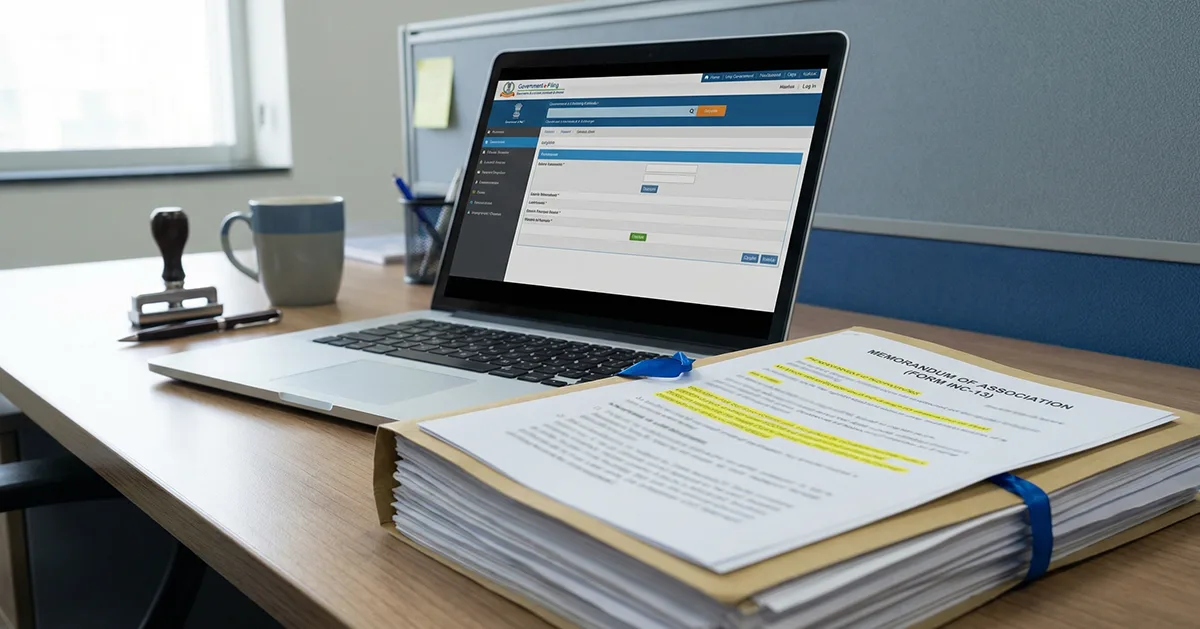
Form INC-13 for Section 8 Company: Drafting & Approving the MoA

Can a Section 8 Company Invest in Shares? Profit-Making & Tax Explained

How to Convert Trust Into a Section 8 Company?

Documents Required for Section 8 Company Registration in India: Complete List (2026)

List of Top 10 Section 8 Companies in India
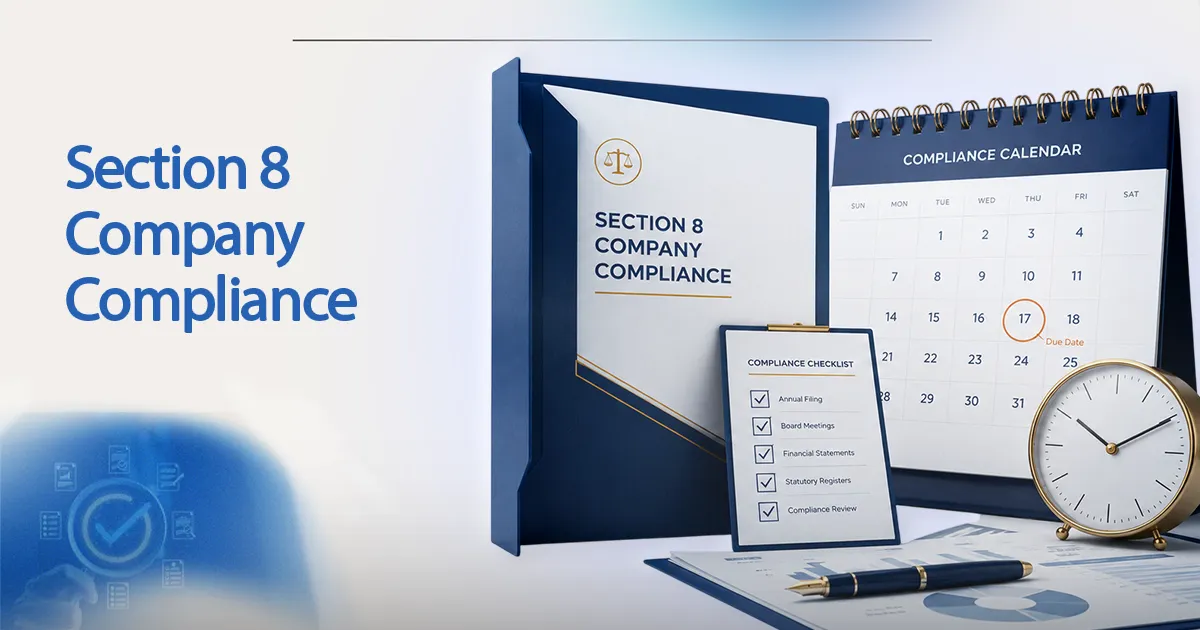
Section 8 Company Compliances: Annual & ROC Checklist 2026

Section 8 Company vs NGO in India: Differences Explained

Section 8 Company Registration Fees in India: Cost Breakdown