

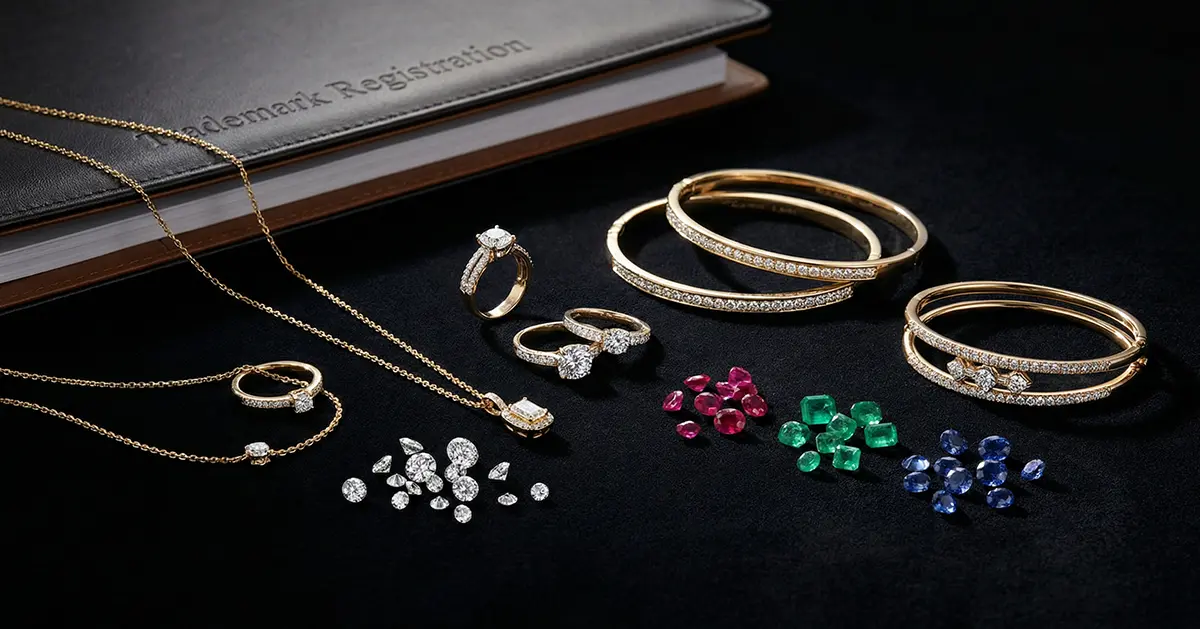
Trademark Class 14 covers both fine jewellery and imitation jewellery. A gold necklace and a gold-plated brass chain can fall under the same class.
WIPO’s Class 14 includes jewellery, precious metals, gemstones, and imitation jewellery. It also covers watches and clocks. Under India’s Trade Marks Act, 1999, trademark registration in Class 14 covers brands such as Tiffany & Co., Cartier, Tanishq, and Rolex, along with small jewellery and fashion-jewellery businesses.
Key Takeaways
- Class 14 covers jewelry, precious metals and alloys, precious/semi-precious stones, horological instruments (watches, clocks), and adornment items like cufflinks and tie pins.
- Imitation and costume jewelry made from non-precious materials is explicitly part of Class 14, not a separate category. WIPO’s own class heading names it directly.
- It does not cover non-precious industrial metals (Class 6), jewelry storage/display items (Class 20), retail or repair services (Class 35/37), or loose decorative components (Class 26).
- Filing fees are ₹4,500 per class for individuals and small enterprises, and ₹9,000 per class for other applicants.
- Validity runs 10 years from the date of application, not the registration date, renewable every 10 years.
- Objection replies are due within 30 days, with a discretionary one-month extension available via Form TM-M under Rule 109.
What is Trademark Class 14 for Jewelry in India?
Class 14 protects your brand name and logo, not the quality or purity of your metal. BIS hallmarking certifies the purity of gold or silver. It is separate from trademark registration.
A jeweller can have BIS hallmarking without trademark protection, or a registered trademark without hallmarking. One does not replace the other.
Class 14 registration helps you stop competitors from using your brand name or logo. It does not certify the material used in your products. Jewellery businesses may need both BIS hallmarking for metal purity and trademark registration for brand protection.
Who Should Register a Trademark Under Class 14?
If your business deals in jewelry, precious metals, gemstones, or luxury watches, establishing a strong brand identity is critical. Class 14 ensures your brand stands out and commands trust by protecting your brand name, logo, or other types of trademarks.
Businesses and individuals who should register under Class 14 include:
- Jewelry designers and manufacturers: Signature designs and market recognition for finished jewelry.
- Gold, silver, and platinum traders: Credibility for high-quality precious metal products.
- Luxury watchmakers and timepiece brands: Exclusive brand names and logos for watches and clocks.
- Gemstone dealers and exporters: Authenticity and reputation for diamonds, rubies, sapphires, and other stones.
- Online jewelry startups and D2C brands: Digital brand visibility before entering the market.
- Imitation and costume jewelry brands: Fashion jewelry made from non-precious materials is equally eligible for Class 14 protection.
- Family-owned traditional jewelry businesses: Legacy protection and long-term brand loyalty.
Global brands like Bvlgari and Chopard, and Indian brands like Kalyan Jewellers and Malabar Gold & Diamonds, are registered under Class 14.
Goods Covered Under Trademark Class 14: Detailed List
In Class 14, both the material and the design matter. This class covers the following goods:
| Category | Examples |
|---|---|
| Jewelry and Ornaments | Rings, necklaces, bangles, bracelets, earrings, pendants, brooches, anklets, wedding and bridal jewelry |
| Precious Metals and Alloys | Gold, silver, platinum, palladium in raw or semi-worked form; metal sheets, wires, bars, ingots used in jewelry making |
| Precious and Semi-Precious Stones | Diamonds (natural and lab-grown), rubies, sapphires, emeralds, pearls, opals, jade, topaz |
| Imitation or Costume Jewelry | Artificial jewelry, including fashion jewelry made of crystals, glass, or non-precious materials |
| Horological and Chronometric Instruments | Watches, clocks, chronometers, watch cases, movements, and parts |
| Luxury Items Used for Adornment | Cufflinks, tie pins, medals, charms, keyrings, money clips |
Goods Not Covered Under Trademark Class 14
Although Class 14 has a broad scope, certain related goods and services fall outside its coverage. These include:
- Non-precious metals used industrially: Iron, copper, brass, aluminium for construction or manufacturing fall under Class 6.
- Jewelry storage and display items: Jewelry boxes, cases, or trays not made of precious metals fall under Class 20.
- Jewelry-related services: Retail, wholesale, repair, or maintenance services fall under Class 35 or Class 37.
- Loose decorative components: Beads, findings, or decorative items not sold as finished jewelry fall under Class 26.
- Functional accessories without ornamental use: Electronic or technical accessories fall under Class 9; household or utility articles fall under Class 21.
Swarovski shows this distinction well. Its ornamental jewelry falls under Class 14, while some decorative crystal components may fall under other classes based on their use.
How to Register a Trademark Under Class 14 in India?
Turning your jewelry, gemstones, or luxury watches into a recognized symbol of authenticity starts with Class 14 registration. Follow these steps to secure your trademark:
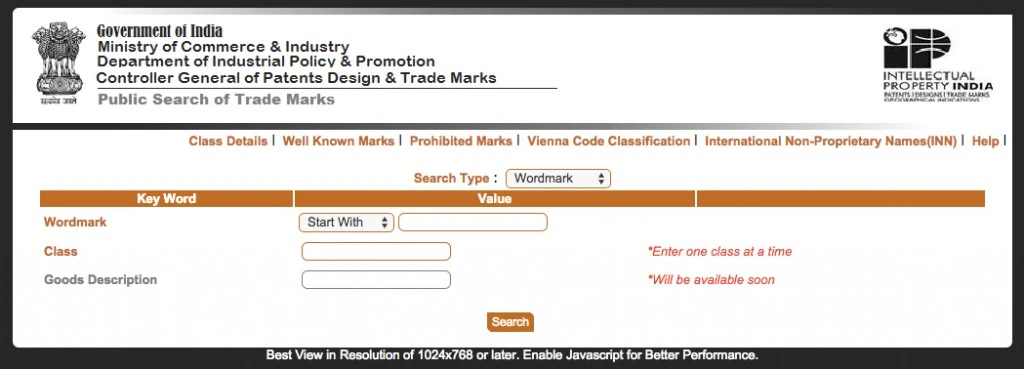
- Search first: Check the Indian Trademark Registry or use RegisterKaro’s trademark name availability check tool. Look for similar-sounding or visually similar marks.
- File Form TM-A: Submit the applicant details, trademark representation, and Class 14 goods. Attach the documents required for trademark registration. Companies filing online also need a Digital Signature Certificate. The fee is ₹4,500 for individuals and small enterprises and ₹9,000 for other applicants.
- Respond to examination: The Trademark Office checks the mark for distinctiveness and similarity to existing marks. If it raises trademark objections, respond within one month. You can request a discretionary one-month extension through Form TM-M.
- Publication and opposition: Once approved, the mark is published in the Trademark Journal. Third parties then get 4 months to file a trademark opposition.
- Registration and renewal: Once cleared, you receive the registration certificate and exclusive rights under Class 14. The trademark remains valid for 10 years from the application date. You can renew it every 10 years.
The process typically takes 12 to 18 months. Objections or opposition can extend the timeline.
Common Mistakes When Filing Under Class 14 and How to Avoid Them
Filing a trademark incorrectly can cause delays, objections, or even rejection. Avoid these common mistakes to ensure a smooth process:
- Skipping a Trademark Search: Filing without checking for existing marks risks rejection due to conflict. Search thoroughly before filing.
- Choosing a Generic or Descriptive Name: Names like “Golden Ring” or “Diamond Jewel” lack distinctiveness and may be refused. Pick a unique or coined name instead.
- Incomplete or Incorrect Application: Missing applicant details or unclear goods descriptions cause objections. Describe your Class 14 goods precisely.
- Ignoring Related Classes: Filing only under Class 14 may leave other products or services unprotected. Consider Class 18, 26, or 35 if relevant.
- Missing Deadlines for Responses: Late replies to objections or opposition notices can result in refusal. Track deadlines and respond promptly.
- Assuming Automatic Protection: Using a brand doesn’t give legal rights without registration. File early to secure enforceable protection.
