

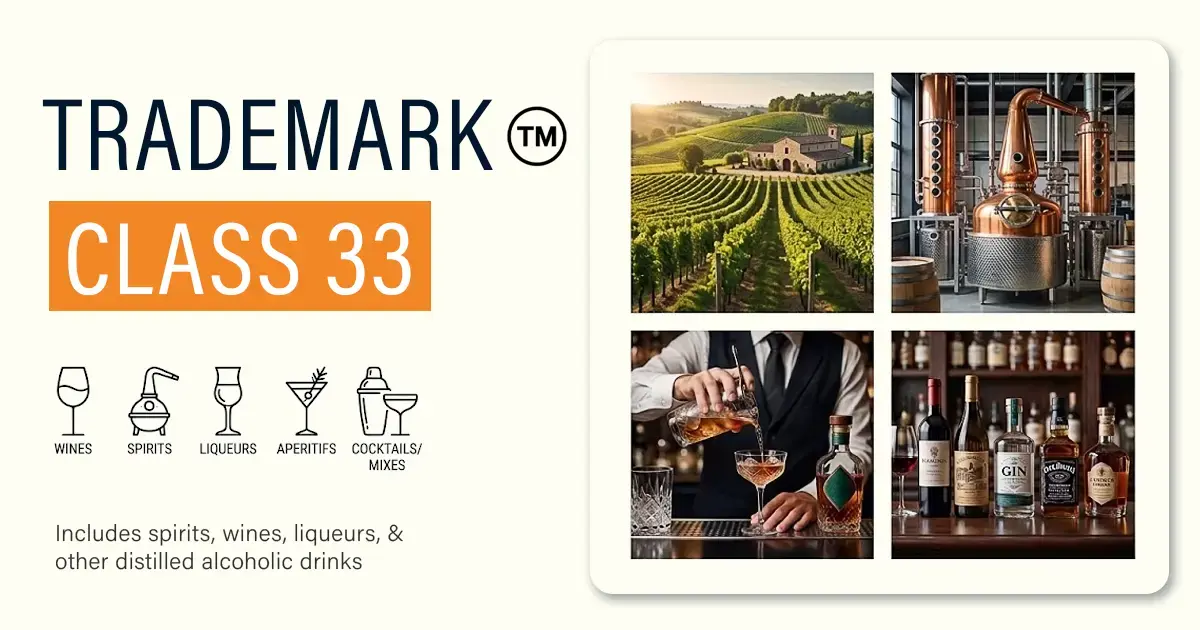
Trademark Class 33 covers alcoholic beverages for human consumption, except beer. It includes whisky, vodka, rum, gin, brandy, tequila, wine, liqueurs, cordials, aromatized wines, and ready-to-drink spirits. If you sell whisky, vodka, rum, gin, brandy, wine, liqueurs, or other distilled spirits in India, you should file your trademark application under Class 33.
India’s alcoholic beverages market is highly competitive and strictly regulated. Global brands like Johnnie Walker, Smirnoff, Bacardi, and Absolut use Class 33 registrations to protect their brands.
Indian leaders such as Amrut, Paul John, Indri, Rampur, Sula Vineyards, Old Monk, Royal Stag, and McDowell’s No. 1 also rely on Class 33 registrations.
Key Takeaways
- Class 33 covers all alcoholic beverages except beer, including whisky, vodka, rum, gin, wine, liqueurs, cider, and bitters.
- Alcoholic cider is Class 33, not Class 32; only non-alcoholic cider belongs in Class 32.
- Medicinal alcohol, industrial alcohol, alcohol-based cosmetics, and alcohol used in food fall outside Class 33, under Classes 5, 1, 3, and 30 respectively.
- Terms like “premium,” “duty-free,” or “private label” describe sales channels, not distinct goods categories, filings should describe the actual beverage.
- Class 33 registrations stay legally enforceable even in dry states like Gujarat, Bihar, Nagaland, Mizoram, and Lakshadweep.
- Trademark registration doesn’t replace state excise licenses, FSSAI registration, or other approvals needed to legally sell alcohol.
- Filing fees are ₹4,500 per class for individuals, startups, and MSMEs, and ₹9,000 for companies, LLPs, and partnerships.
- Alcohol brands commonly file across multiple classes: Class 33 for the beverage, Class 32 for beer, Class 35 for distribution, and Class 43 for hospitality venues.
Trademark Class 33: Quick Facts
| Detail | Description |
|---|---|
| Class Number | 33 |
| Type | Goods |
| Covers | Alcoholic beverages (except beer), whisky, vodka, rum, gin, wine, liqueurs, aromatized wines, RTDs |
| Excludes | Beer (Class 32), medicinal alcohol (Class 5), industrial alcohol (Class 1), cosmetic alcohol (Class 3), food with alcohol (Class 30) |
| Governing Law | Trade Marks Act, 1999 |
| Classification System | NICE Classification (13th Edition, NCL 13-2026) |
| Filing Form | Form TM-A |
| Government Fee | ₹4,500 (individual/startup/MSME) or ₹9,000 (company/LLP) per class |
| Validity | 10 years from the date of filing |
| Renewal | Form TM-R, renewable indefinitely every 10 years |
| Filing Mode | Online via the IP India e-filing portal |
| Additional Compliance | State Excise License, FSSAI, BIS Standards, label registration |
Who Can File for Trademark Class 33?
Any business that produces, distributes, imports, exports, or sells alcoholic beverages (excluding beer) can file for trademark registration under Class 33. These include:
- Distilled spirit manufacturers, producing whisky, vodka, rum, gin, brandy, tequila, and other distilled alcoholic beverages under a distinct brand name.
- Wine producers and vineyards, making red, white, rosé, sparkling, fortified, dessert, or fruit wines for retail, hospitality, or export markets.
- Liqueur and cordial manufacturers, producing flavored spirits, herbal liqueurs, cream liqueurs, coffee liqueurs, and ready-to-drink alcoholic beverages and pre-mixed alcohols.
- Premium and craft alcohol brands, offering boutique, artisanal, small-batch, or luxury alcoholic beverages targeting niche consumer segments.
- Importers and exporters of alcoholic beverages, bringing international liquor and wine brands into India or distributing Indian brands in global markets.
- Private label alcohol producers, manufacturing alcoholic beverages for hotels, retail chains, duty-free outlets, or exclusive brand collaborations.
- Alcoholic beverage marketers and brand licensors, involved in licensing, franchising, co-branding, or brand extension of spirits and wine labels.
- Suppliers and distributors, supplying spirits, wines, and liqueurs to retailers, bars, restaurants, clubs, and hospitality businesses.
- Duty-free and travel retail alcohol brands, selling alcoholic beverages through airport duty-free and travel retail channels.
What are the Goods Covered Under Trademark Class 33?
Class 33 covers alcoholic beverages intended for human consumption, excluding beer. These goods are commonly sold through liquor retail stores, bars, restaurants, hotels, clubs, duty-free outlets, and hospitality channels.
| Category | Examples of Goods Covered |
|---|---|
| Distilled Spirits | Whisky, vodka, rum, gin, brandy, tequila, absinthe, and other distilled alcoholic beverages |
| Wines | Red wine, white wine, rosé wine, sparkling wine, fortified wine, dessert wine, fruit wine |
| Aromatized Wines | Vermouth, flavored wines, and herbal-infused wines |
| Liqueurs & Cordials | Herbal liqueurs, cream liqueurs, fruit liqueurs, coffee liqueurs, cordials |
| Alcoholic Bitters | Beverage bitters used in cocktails and mixed drinks |
| Ready-to-Drink (RTD) Alcoholic Beverages | Pre-mixed alcoholic drinks, bottled cocktails, flavored spirits (excluding beer-based drinks) |
| Cider & Perry | Alcoholic cider, hard cider, and perry (fermented pear beverage) |
| Alcoholic Essences & Extracts | Alcohol-based flavoring essences and extracts for beverages (non-medicinal) |
Products Not Included in Trademark Class 33
Some products, despite being related to alcohol or beverages, fall under different trademark classes. These include:
- Beer, malt beverages, soft drinks, fruit juices, energy drinks, mineral water, and alcohol-free beer, de-alcoholised wines, and zero-proof spirits all fall under Trademark Class 32.
- Medicinal and therapeutic alcohol, such as tonics, medicinal wines, and herbal medicinal preparations, fall under Class 5 due to their therapeutic purpose.
- Industrial and chemical alcohol, including ethanol, methanol, and denatured alcohol used for industrial or laboratory purposes, falls under Class 1.
- Alcohol-based cosmetics and personal care products, such as perfumes, deodorants, aftershaves, and colognes containing alcohol, fall under Class 3.
- Food products containing alcohol, including chocolates, desserts, sauces, and confectionery made with alcohol, are classified under Class 30 or the relevant food class.
- Alcoholic flavorings for cooking, alcohol-based extracts intended for culinary use rather than beverage consumption, fall under Class 30.
How to Register Your Trademark in Class 33?
Follow these steps to register your trademark in Class 33:
Step 1. Conduct a Trademark Search: Check your brand name, logo, or label on the IP India Trademark Public Search portal. Look for identical or similar Class 33 marks. You can also use a professional trademark search for deeper conflict analysis.
Confirm Class 33 fits your products with a trademark class search tool before filing.
Step 2. Select the Right Goods Description: Clearly list all alcoholic beverages you want to protect, such as blended whisky, fruit-flavored liqueurs, sparkling wine, or ready-to-serve cocktails.
Step 3. Prepare and File the Application (Form TM-A): File your trademark application through the IP India Trademark E-Filing Portal or offline at the Trademark Registry. Include your brand name, logo (if any), detailed goods description, and applicant details.
| Applicant Type | Online Filing (Per Class) | Physical Filing (Per Class) |
|---|---|---|
| Individual / Sole Proprietor | ₹4,500 | ₹5,000 |
| Startup (with DPIIT recognition) | ₹4,500 | ₹5,000 |
| MSME (with Udyam registration) | ₹4,500 | ₹5,000 |
| Company / LLP / Partnership Firm | ₹9,000 | ₹10,000 |
Step 4. Respond to Examination Objections: The Registrar checks your application under Sections 9 and 11 of the Trade Marks Act, 1999. If objected, submit a trademark objection reply within 30 days. Common objections include descriptive names, similar liquor brands, and broad goods descriptions.
Step 5. Complete Journal Publication: Once accepted, the Registry publishes your trademark in the Trademark Journal. Third parties can oppose the application within four months of publication.
Step 6. Receive Trademark Registration: If no trademark opposition is filed, or all objections are resolved, the Registry registers your trademark. You can then use the ® symbol and enjoy exclusive rights over your Class 33 brand for 10 years, with the option to renew indefinitely.
Trademark Classes Related to Class 33: Multi-Class Filings
Alcoholic beverage brands often operate across multiple product and service categories. Here are the classes most frequently filed alongside Class 33:
| Class | What It Covers | Why It Matters for a Class 33 Brand |
|---|---|---|
| Class 32 | Beer, ale, malt beverages, non-alcoholic cider, non-alcoholic drinks | File here if your brand also covers beer, malt-based products, or non-alcoholic cider. |
| Class 5 | Medicinal alcohol, tonics, therapeutic alcoholic preparations | File here if you produce alcohol intended for medicinal or therapeutic use. |
| Class 3 | Alcohol-based cosmetics and personal care products | File here if your brand extends into perfumes, aftershaves, or cosmetic sprays. |
| Class 30 | Food and beverage products containing alcohol as an ingredient | File here if your brand covers chocolates, desserts, or cooking products with alcohol. |
| Class 35 | Wholesale, import, distribution, retail, and e-commerce services | File here if you operate distribution networks, franchises, or online retail platforms. |
| Class 43 | Hospitality services including bars, restaurants, hotels, and tasting rooms | File here if your brand operates or licenses establishments that serve alcoholic beverages. |
For example, Diageo, a leading global alcoholic beverages company, registers:
- Whisky, vodka, and rum under Class 33
- Beer products under Class 32
- Wholesale and distribution services under Class 35
This strategy safeguards its brand identity across multiple product lines, prevents unauthorized use, and strengthens market recognition.
