2 matching trademarks
| Wordmark / Owner | App # | Class | State | Status | Filed |
|---|---|---|---|---|---|
BAKE STATION BY BHAVNA (1) AVANI MAHENDRABHAI NATHWANI TRADING AS BAKESTATION BY BHAVNA A SOLE PROPRIETORSHIP FIRM\nSingle Firm | 6977769 | 30 | Gujarat | Accepted & Advertised | 26/04/2025 |
Kaka Bakery - Your favourite eggless bakers (1) BIMLA ARORA\nSingle Firm | 4701114 | 30 | Haryana | Accepted & Advertised | 14/10/2020 |
— Public Notice —
File your trademark in India today
Free availability check, attorney drafting and end-to-end TM-A filing. Government + professional fees from ₹999.
For individuals or companies who just want to file a trademark.
- Help choosing the right trademark class
- Drafting & Filing by TM Expert + Power of Attorney form
- Acknowledgement Receipt
- TM usage guide
* Data is currently under processing and may be incomplete or subject to change.
Browse by Nice Class
The Nice Classification splits goods (Classes 1–34) and services (Classes 35–45). Choose a class to see live filings, leading owners and status breakdowns.
Leading Geographies
The states that account for the most trademark filings on record.
Leading States
Filed Under Status
Filter the register by registration status — for opposition research, due diligence and brand-availability checks.
More Than Search
Professional-grade monitoring and analysis, rolling out for serious brand owners and attorneys.
Trademark Watch
Get notified the moment a confusingly similar mark is filed. Set a standing watch on your registered brands.
- Real-time conflict alerts
- Phonetic & visual matching
- Weekly email digests
Premium Search
AI-ranked conflict scoring with unlimited, exportable clearance reports built for filing decisions.
- AI similarity scoring
- Unlimited search reports
- Exportable PDF dossiers
Logo / Image Search
Find visually similar logos using CLIP embeddings and search the register by Vienna classification code.
- CLIP visual embeddings
- Vienna code lookup
- Reverse logo search
— Public Notice —
File your trademark in India from ₹999
Free availability search, attorney-led drafting, Nice-class advice, and end-to-end TM-A filing at the appropriate Trade Marks Registry. Pick the plan that fits — government fee additional.
For individuals or companies who just want to file a trademark.
- Help choosing the right trademark class
- Drafting & Filing by TM Expert + Power of Attorney form
- Acknowledgement Receipt
- TM usage guide
About the Indian Trademark Registry
The Indian Trademark Registry, operated by the Office of the Controller General of Patents, Designs and Trade Marks (CGPDTM) under the Department for Promotion of Industry and Internal Trade (DPIIT), maintains the public record of every trademark ever filed in India. Filings are governed by the Trade Marks Act, 1999 and the Trade Marks Rules, 2017, and are processed through five regional offices: Mumbai, Delhi, Kolkata, Chennai and Ahmedabad. The live register today holds more than 2,465 applications and registrations across all 45 Nice classes.
Registerkaro indexes the entire public file daily so you can search any wordmark without logging into ipindia.gov.in, without solving the CAPTCHA, and without the registry's frequent downtime. Every record links back to the original public file, so what you see is exactly what an examiner, opponent or judge would see.
Use the lookup at the top of this page for a direct wordmark search. To narrow research, browse the facets above: Nice class (the goods or services covered), state (the applicant's address of record), or status (registered, in prosecution, or abandoned).
What is a Trademark Search?
A trademark search is the process of checking whether a brand name, logo, slogan, or device mark is already registered or pending registration on the IP India (CGPDTM) trademark register. It tells you whether your proposed mark is available for filing, identifies the correct trademark class under the NICE classification, and surfaces any identical or deceptively similar marks that could trigger objections under Sections 9 and 11 of the Trade Marks Act, 1999.
A thorough trademark search covers four dimensions:
- Wordmark search - exact and partial matches of your brand's text.
- Phonetic search - names that sound similar (e.g., "Kwik" vs. "Quick").
- Device/logo search - visually similar logos and design marks.
- Class-based conflict check - marks already registered in the same or related goods/services class.
Skipping this step is one of the most expensive mistakes a founder can make; a single rejected trademark application costs ₹4,500–₹9,000 in government fees alone, and a full opposition battle can cost ₹50,000–₹5 lakh in legal fees.
It also helps you identify the right trademark class for your goods or services.
Why Should You Do a Trademark Name Search?
A trademark name search is the cheapest insurance policy you'll ever buy for your brand. Skipping it can cost you years of brand equity, rebranding expenses, and legal fees. Here's what a proper search protects you from:
- Trademark infringement claims: Using a name already registered to someone else can trigger a cease-and-desist notice, an injunction, and damages under Section 29 of the Trade Marks Act, 1999. Brands like Burger King India and McDonald's have litigated infringement cases worth crores.
- Application rejection by the Registrar: Roughly 35% of trademark applications in India face objections or examination reports, mostly due to similarity with existing marks under Sections 9 (absolute grounds) and 11 (relative grounds).
- Third-party opposition during the 4-month publication window: Even if your application clears examination, any third party can oppose it once published in the Trade Marks Journal. A pre-filing search dramatically reduces opposition risk.
- Lost time and filing fees: Each rejected application costs ₹4,500 (individual) or ₹9,000 (company) in government fees, plus the 6–12 months of waiting.
- Forced rebranding after launch: The worst-case scenario: you launch, build brand equity, then receive a legal notice from a prior trademark holder. Rebranding mid-stream can cost ₹10 lakh to ₹1 crore for established businesses.
Trademark Class Search: How Classes Work
Not sure what class is in trademark search? A trademark class is a category under the NICE Classification that groups goods and services into 45 classes — Classes 1–34 cover goods, and Classes 35–45 cover services. You must file in the class that matches your actual business; the wrong class leaves your brand unprotected.
Types of Trademarks You Can Search in India
The IP India register protects nine types of trademarks. Our search tool covers all of them:
- Word marks — text-only brand names like "Tata" or "Zomato."
- Device marks (logo marks) — graphic symbols, like the Nike swoosh or Apple logo.
- Combined marks — a logo with text, like the Amazon smile mark.
- Service marks — marks used for services rather than goods (e.g., "Swiggy" for food delivery).
- Collective marks — owned by an association (e.g., "CA India").
- Certification marks — like "ISI" or "Agmark."
- Shape marks — distinctive product shapes (e.g., the Coca-Cola bottle).
- Sound marks — audio jingles registered as trademarks (e.g., the Britannia jingle).
- Colour marks — specific colour combinations associated with a brand.
How to Search Trademark Names in India?
Follow these simple steps to search for a trademark online in India:
Step 1: Enter the Trademark Name
Enter your proposed brand name, slogan, or existing trademark application number into the search bar. The tool accepts wordmarks (e.g., "Acme"), descriptive phrases (e.g., "Acme Skincare"), and trademark application numbers (e.g., 4567890). For broader discovery, you can also search by proprietor name or attorney name. Pro tip: search the root word of your brand, not the suffix — "Bira91" is registered under "Bira" as the dominant element.
Step 2: Choose the Relevant Class
Select the relevant trademark class (1 to 45) based on your goods or services. Not sure which class fits? Use our free trademark class search tool, describe your business, and we'll suggest the right class(es). Most businesses file in 1–3 classes; multi-class filings cost ₹9,000 per class in government fees but offer broader protection. For a comprehensive search, we recommend checking adjacent classes too (e.g., a clothing brand should check Class 25 + Class 35 for retail).
Step 3: View All Matching Records
Your search results will display every conflicting or relevant mark across these categories:
- Registered trademarks — actively protected marks with a registration certificate.
- Pending applications — marks filed but awaiting examination, publication, or registration.
- Opposed marks — applications currently being contested by third parties.
- Abandoned/withdrawn marks — applications that did not proceed (sometimes available for re-registration).
- Expired marks — registrations that lapsed and may be available again.
- Phonetically similar marks — names that sound like yours, even if spelled differently.
Each result shows the application number, filing date, class, applicant name, current status, and registration date (where applicable). You can click any result to view full details or save it to your shortlist.
Step 4: Check Availability
Based on your results, you can immediately see how to search for trademark availability in India and decide whether your brand is safe to register.
Our thorough trademark search process includes:
- Phonetic and similar word analysis
- Exact match checking
- Class-specific conflict check
- Cross-category similarity check
- Trademark availability search
This ensures accurate results and reduces risk before you file your trademark.
How to Check Trademark Status in India
To check a trademark's status, enter the trademark application number in the search bar (or look it up on ipindiaonline.gov.in). Each result shows the current stage: Filed → Examination Report Issued → Accepted & Advertised → Opposed → Registered. RegisterKaro's dashboard tracks status in real time with alerts when an application's stage changes.
Trademark Search vs. Company Name Search vs. Domain Search
| Feature | Trademark Search | Company Name Search (MCA) | Domain Search |
|---|---|---|---|
| Authority | IP India / CGPDTM | Ministry of Corporate Affairs | ICANN-accredited registrars |
| What it checks | Brand names, logos, slogans | Registered company/LLP names | .com, .in, .co.in availability |
| Legal protection | Yes — under the Trade Marks Act, 1999 | Limited — entity name only | None — purely technical |
| Validity period | 10 years (renewable) | Permanent (with annual filings) | Annual renewal |
| Cost | ₹4,500–₹9,000 per class | Free as part of incorporation | ₹500–₹2,000/year |
| Where to check | IP India trademark register | MCA Master Data | Any domain registrar |
Common Reasons Trademark Applications Get Rejected
Even with a clean search, applications can fail at the examination stage. Knowing the common grounds for rejection helps you choose stronger names from the start:
- Section 9 (Absolute grounds): Generic, descriptive, or non-distinctive marks (e.g., "Sweet Sweets" for a candy shop).
- Section 11 (Relative grounds): Similarity to an existing registered mark — even in a different class if it's a well-known brand.
- Geographical indicators: Names that suggest a specific origin you're not from (e.g., "Darjeeling" for tea outside Darjeeling).
- Offensive or scandalous marks: Anything contrary to public morality.
- Government/official names: Names resembling state emblems, flags, or international organizations (protected under the Emblems Act, 1950).
- Surnames alone: Pure surnames are often rejected unless they've acquired distinctiveness.
- Functional features: Shapes that result from the nature of goods or are necessary for technical function.
Who Should Run a Trademark Search?
A trademark search is essential for:
- First-time founders before incorporating their company.
- D2C brand owners are launching new product lines.
- Restaurant and cafe owners opening new outlets or franchises.
- SaaS and tech startups choosing a global brand name.
- Agencies and consultancies rebranding from a personal name.
- Established businesses expanding into new product categories (and needing new class registrations).
- Investors and acquirers doing IP due diligence before a deal.
- Lawyers and CS professionals running pre-filing checks for clients.
- Anyone receiving a cease-and-desist notice — to assess the other party's claim.
Why Choose RegisterKaro's Free Trademark Search Tool?
RegisterKaro makes trademark name search fast, accurate, and effortless for businesses of all sizes. Here's why users across India trust us for their trademark search needs:
- Free, unlimited searches — Run as many trademark searches as you need with no signup, no credit card, no daily limit.
- Live IP India database — Our tool pulls data directly from the official IP India (CGPDTM) trademark register, updated daily.
- Phonetic + similar-mark scanning — Goes beyond exact-match search to catch names that sound or look similar (a step most free tools skip).
- All 45 NICE classes covered — Search across every trademark class, including services classes 35–45 that most tools deprioritize.
- Wordmark + logo + device mark search — Search by text, image, or proprietor name.
- Status tracking dashboard — Save your searches, monitor application progress, and get alerts on status changes.
- Built for Indian founders — Suggestions account for IP India examination patterns and common rejection grounds under Sections 9 and 11.
- One-click filing handoff — Found a clear name? File your trademark application on RegisterKaro starting at ₹1,999 + government fees, reviewed by registered trademark agents.
- 50,000+ businesses served — Real track record across startups, D2C brands, restaurants, SaaS companies, and consulting firms.
Start Your Trademark Name Search for Free Today
Don't let a preventable naming conflict cost you months of brand-building and lakhs in legal fees. Use RegisterKaro's free trademark search tool right now to check availability across all 45 classes, scan for phonetically similar marks, track application status, and shortlist names that are actually clear to register. If you find a name that works, file your trademark in 24 hours with full attorney review — starting at ₹1,999 + government fees.
Frequently Asked Questions
Yes, RegisterKaro’s trademark search tool is 100% free with no signup, no credit card, and no daily limits. You can run unlimited searches across all 45 NICE trademark classes, check wordmarks, scan for phonetically similar marks, and view full application details — all without paying a rupee. You only pay if you choose to file a trademark application through us, which starts at ₹1,999 + government fees and includes attorney review and end-to-end filing support.
Our trademark search is highly accurate because it pulls live data directly from the official IP India (CGPDTM) register, covering exact, partial, phonetic, and class-specific matches across all 45 classes. The tool covers exact matches, partial matches, phonetic similarities, and class-specific conflicts across all 45 NICE classes. However, no automated search can replace a full attorney-led common-law and trademark search, so we recommend a manual review by a registered trademark agent before filing if your brand investment is significant.
A trademark search is the pre-filing check to see whether your brand name, logo, or slogan is available and free of conflicts on the IP India register. Trademark registration is the legal filing process that, once approved, grants you exclusive rights to use the mark for 10 years under the Trade Marks Act, 1999. Think of search as due diligence and registration as the actual legal protection. You should always complete a search before filing for registration.
Generally no. If an identical or deceptively similar trademark application is already pending in the same class or a related class, your application is likely to be objected to under Section 11 of the Trade Marks Act, 1999, or opposed by the prior applicant. You can still file, but the chances of rejection are high. In some cases, you may file a ‘no objection’ coexistence agreement with the prior applicant, but this requires legal negotiation.
Trademark registration in India typically takes 12 to 24 months from filing to receiving the registration certificate, assuming no objections or oppositions. The process includes filing (1 day), examination (4–6 months), publication in the Trade Marks Journal (4-month opposition window), and registration (1–2 months after the opposition window closes). If your application faces an examination report or opposition, the timeline can extend to 24–36 months.
Government fees for trademark registration in India are ₹4,500 per class for individuals, startups, and small enterprises, and ₹9,000 per class for companies, partnerships, and LLPs. If you file across multiple classes, the fees multiply by the number of classes. Professional fees from trademark attorneys typically range from ₹1,999 to ₹15,000 per application, depending on the complexity. RegisterKaro’s trademark filing service starts at ₹1,999 + government fees and includes attorney review and filing.
You are not legally required to hire a lawyer — you can file a trademark application yourself on the IP India portal. However, a significant share of self-filed applications face examination objections or rejection, most often due to incorrect class selection, weak distinctiveness, or missing documents. A registered trademark agent or attorney significantly improves your approval chances and helps you respond to examination reports, oppositions, and hearings if they arise.
The TM (™) symbol indicates that you are claiming a mark as your trademark, regardless of whether it is registered. You can use TM the moment you file an application or even before filing. The R (®) symbol indicates that the mark is officially registered with IP India and protected under the Trade Marks Act, 1999. Using R for an unregistered mark is illegal and can attract penalties under Section 107 of the Act.
The IP India (CGPDTM) trademark register is updated daily as new applications are filed, examined, published, opposed, or registered. Our tool syncs with the official database in near real time, so the results you see reflect the most recent filing data available. That said, there can be a 24–72 hour lag between when an application is filed and when it appears in the public search, so for very fresh filings, a manual cross-check is recommended.
If a third party opposes your trademark application within the 4-month publication window in the Trade Marks Journal, you receive a notice of opposition and must file a counter-statement within 2 months. The case then moves to the evidence stage, followed by a hearing at the Trade Marks Registry. Opposition proceedings typically take 12–24 months and may cost ₹50,000–₹5 lakh in legal fees, depending on complexity. RegisterKaro offers full opposition response services starting at ₹9,999.
No. Registering your company name with the Ministry of Corporate Affairs (MCA) only reserves the name as a corporate entity; it does not give you trademark protection. MCA approval and trademark registration are governed by different laws, different authorities, and different databases. To legally protect your brand name, logo, or slogan from being used by others, you must file a separate trademark application with IP India under the Trade Marks Act, 1999.
Yes. IP India’s trademark register supports device/logo searches where you can search by visual similarity or by the Vienna classification code assigned to figurative elements. RegisterKaro’s search tool lets you search by wordmark, proprietor name, and application number. For image-based searches, our trademark agents can run a device mark conflict check manually on the IP India portal before you file.
A trademark class is a category under the NICE International Classification of Goods and Services, which divides all products and services into 45 classes (1–34 for goods, 35–45 for services). You must file your trademark in the specific class that covers your goods or services. Filing in the wrong class means your mark won’t protect your actual business. For example, a software company should file under Class 42 (technology services), not Class 9 (computers/hardware) alone. RegisterKaro’s filing service includes class selection review by a trademark agent.
A well-known trademark in India is a mark declared by IP India as having significant public recognition across India, regardless of class. Under Section 11(2) of the Trade Marks Act, 1999, your application can be rejected even if you file in a completely different class if it conflicts with a well-known mark (e.g., Tata, Amul, Apple). Our trademark search automatically flags well-known marks that could be a conflict, which most basic free tools miss.
You can check application status on the official IP India trademark search portal at ipindiaonline.gov.in using your application number. Status stages include: Filed → Examination Report Issued → Accepted & Advertised (published in Trade Marks Journal) → Registration Certificate Issued. RegisterKaro’s dashboard also lets you track status in real time for applications filed through us, with automated alerts when status changes.
Yes. You can file a single trademark application covering multiple classes or file separate applications per class. Filing across multiple classes costs the government fee for each class (₹4,500–₹9,000 per class depending on your entity type). Multi-class applications are useful for businesses operating across product and service categories. RegisterKaro’s trademark attorneys can advise on the optimal class coverage strategy based on your business model.
To do a trademark search in India, enter your brand name or application number in the search tool, select the relevant class (1–45), and review the results for identical, similar, and phonetically similar marks on the IP India register. A complete search also checks logos and adjacent classes. RegisterKaro's free tool does all of this in one search.
Enter the business or company name into the trademark search tool and choose the class matching your goods or services. Remember: a name registered with the MCA is not automatically a trademark — only an IP India search shows whether it's legally protected as a brand.
A phonetic search finds marks that sound similar to yours even when spelled differently (e.g., "Kwik" vs "Quick"). It matters because the Registrar can reject deceptively similar marks under Section 11 of the Trade Marks Act, 1999. Exact-match-only tools miss these conflicts.
An online trademark search takes only a few minutes. A thorough pre-filing search — covering exact, phonetic, device, and cross-class conflicts plus an attorney review — usually takes 1–2 working days for high-stakes brands.
An MCA company name search only checks whether a corporate entity name is free under the Companies Act and gives no brand protection. A trademark search checks the IP India register and tells you whether a name, logo, or slogan can be legally owned under the Trade Marks Act, 1999. Most founders need both.
Recommended Services After Trademark Name Search
Take the next step — register, protect or incorporate with expert guidance.
Related Blogs
Conflicts of Trademark with Domain Name: Legal Issues, Cases & Remedies in India
Trademark vs domain name conflicts in India—cybersquatting, UDRP/INDRP dispute resolution, landmark cases under Trade Marks Act 1999 explained for 2026.
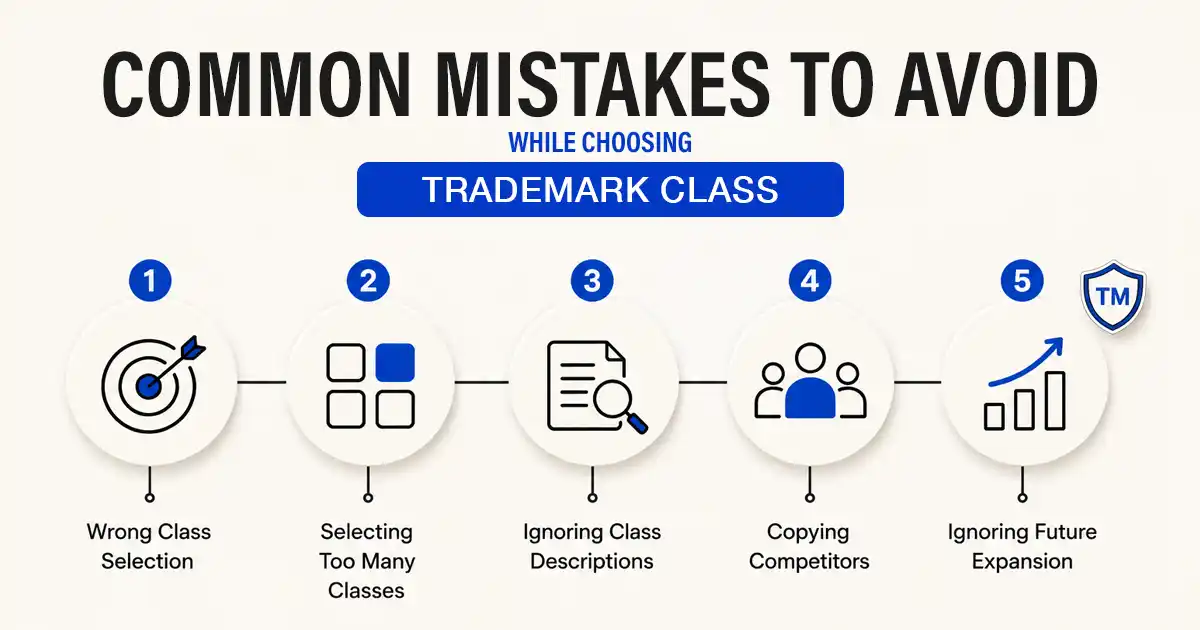
11 Trademark Class Selection Mistakes to Avoid in 2026
11 trademark class selection mistakes to avoid under NICE Classification 2026—wrong class, missing Class 35, multi-class errors, objections & re-filing costs.
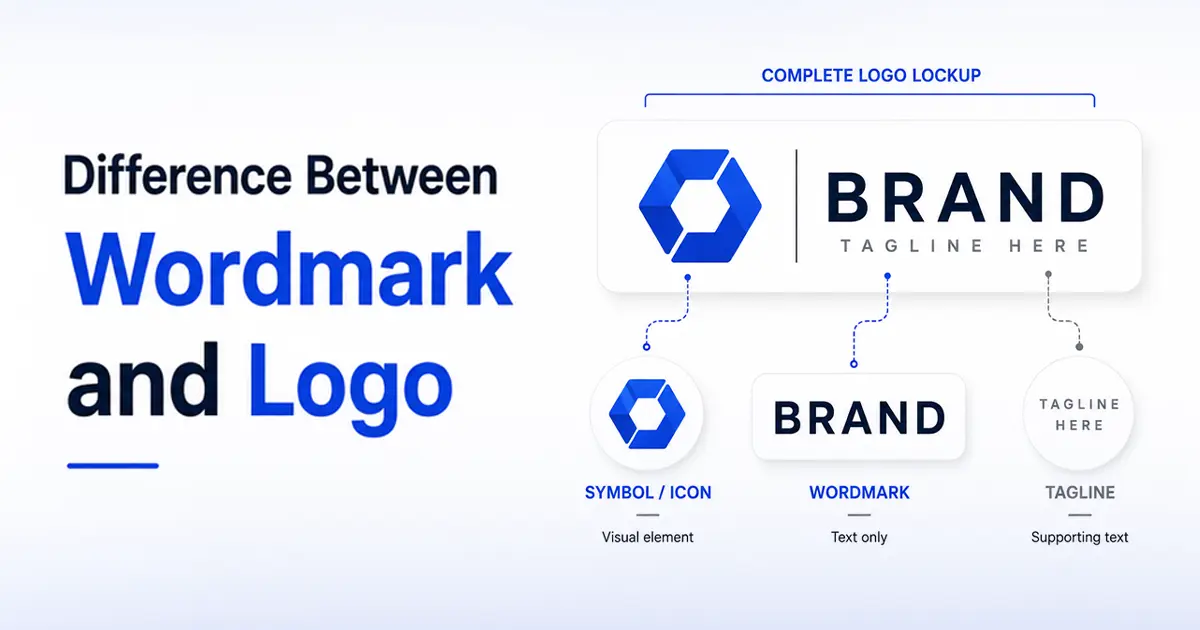
Wordmark vs Logo: Difference, Examples & Trademark Rules in India
Wordmark vs logo 2026: key differences, design examples, which to register first under Trade Marks Act, 1999, Section 17 composite TM rules & cost guide.
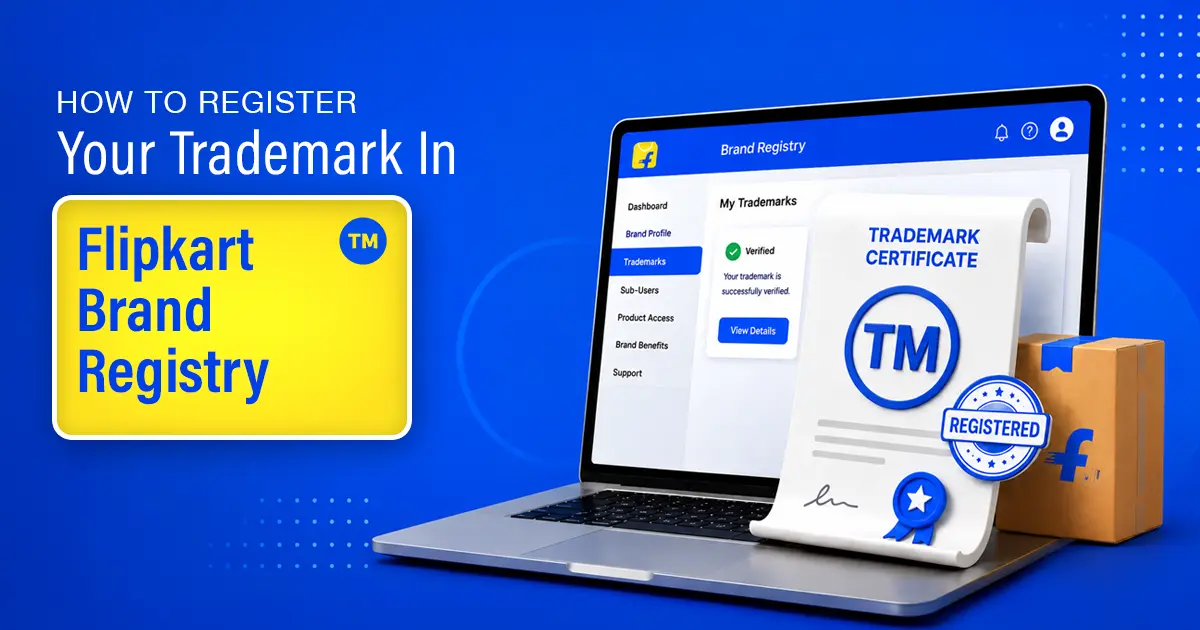
How to Register Your Trademark in Flipkart Brand Registry?
Flipkart Brand Registry 2026: Step-by-step process, documents, trademark class selection & apply for brand approval — plus how to sell without trademark.
Trademark Disclaimer in India 2026: Rules, Examples & Templates
Trademark disclaimer guide for India: Section 17 rules, examination reply templates, real examples & third-party trademark disclaimer formats for websites.

How to Register a Trademark for Amazon Sellers in India: 2026 Guide
How to register a trademark for Amazon sellers in India—Brand Registry, A+ Content, FBA barcode 2026 rules, fees, classes & step-by-step process explained.
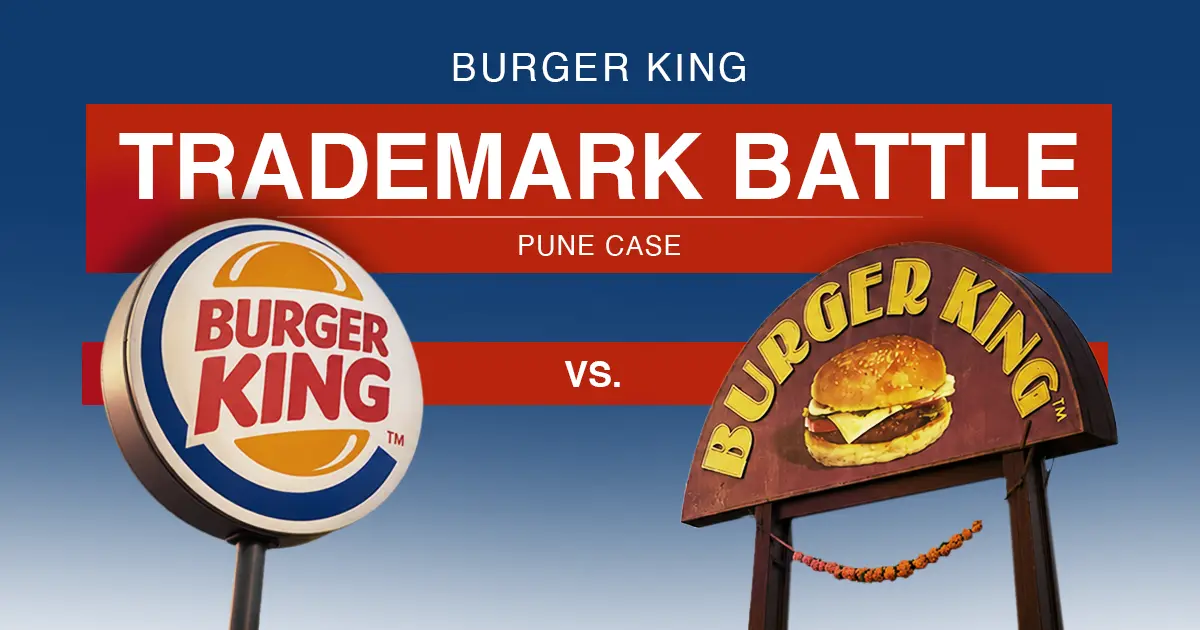
Burger King Pune Trademark Battle Case: Local vs Global Brand
Explore the Burger King Pune trademark battle between a local restaurant and the global fast-food giant over trademark rights issues in India.

Trademark Registration for Sole Proprietorship: Process, Documents & Fees Guide
Learn trademark registration for a sole proprietorship in India in 2026. Check the filing process, fees, required documents, and eligibility for protection.