

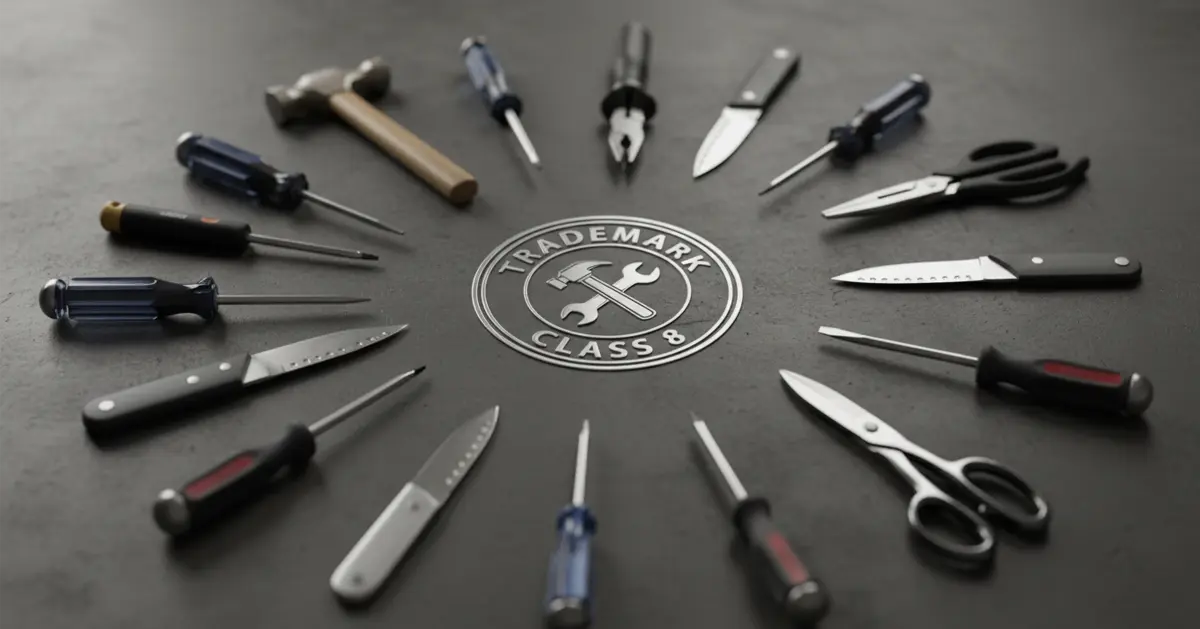
Trademark Class 8 covers hand-operated tools and implements, cutlery, razors, and certain grooming implements. If your business manufactures or sells Class 8 products, registering your brand can help protect your trademark for the goods covered by your registration. Common examples include hammers, screwdrivers, knives, scissors, shears, and gardening tools.
In India, the Trade Marks Act, 1999 governs trademark registration. The World Intellectual Property Organization (WIPO) publishes the Nice Classification, which groups goods and services into different trademark classes. Class 8 covers specific hand-operated tools and other goods listed under this classification.
Key Takeaways
- Trademark Class 8 covers hand-operated tools and implements, cutlery, razors, and certain grooming implements.
- The World Intellectual Property Organization (WIPO) Nice Classification determines the goods covered under Class 8.
- The Trade Marks Act, 1999 governs trademark registration in India.
- Common Class 8 products include hammers, screwdrivers, knives, scissors, shears, and gardening tools.
- Products such as powered machinery, surgical instruments, and kitchen utensils may fall under other trademark classes.
- The registration process includes trademark search, class selection, Form TM-A filing, examination, and publication.
- Government fees depend on the applicant type and filing mode and are charged per class and per mark.
- Registration protects the trademark for the goods covered by the registration and helps strengthen brand recognition.
What is Trademark Class 8 in India?
Class 8 helps businesses protect their brand identity for qualifying goods in the hand tools, cutlery, and related product categories. It is relevant for businesses that manufacture, sell, or plan to launch products such as hand tools, knives, scissors, shears, and gardening implements.
Brands such as Stanley, Bosch, Victorinox, Hultafors, and Fiskars offer products that may fall under Class 8. However, the correct classification depends on the nature and purpose of the specific product.
Who Should Choose Trademark Class 8 in India?
Businesses that manufacture or sell products covered by Class 8 should consider registering their trademark in this class. This may include:
- Tool manufacturers: Businesses making hammers, screwdrivers, pliers, knives, scissors, and other qualifying hand tools.
- Garden tool brands: Businesses offering spades, shears, pruning tools, and other hand-operated gardening implements.
- Hardware businesses: Retailers and brands selling qualifying hand tools for household, construction, or professional use.
- Industrial tool suppliers: Businesses supplying hand-operated tools for workshops, construction sites, and other industrial applications.
- Tool exporters: Businesses selling Class 8 products in international markets may need trademark protection in each relevant country or region.
Which Goods Fall Under Trademark Class 8 in India?
Trademark Class 8 covers a range of hand-operated tools and implements, cutlery, razors, and certain personal grooming implements. The following examples reflect goods covered by the WIPO Nice Classification:
| Goods Type | Examples |
|---|---|
| Hand tools | Hammers, chisels, screwdrivers, pliers, wrenches, hand drills |
| Cutting tools | Knives, scissors, shears, axes, hand-operated cutting tools |
| Gardening tools | Spades, hoes, pruning shears, agricultural forks, hand-operated gardening tools |
| Carpentry and craft tools | Chisels, gravers, hand planes, engraving tools |
| Hand-operated workshop tools | Clamps, bench vices, hand-operated punches, files |
| Personal grooming implements | Razors, nail clippers, manicure and pedicure implements, hair-curling implements |
| Cutlery | Table knives, forks, and spoons |
| Hand-operated pumps | Hand-operated air pumps and other qualifying hand-operated pumps |
| Specialised hand tools | Tongs, awls, augers, blade-sharpening instruments, and other qualifying hand implements |
The classification depends on the nature, function, and intended use of the product. For example, kitchen utensils such as pestles, mortars, nutcrackers, and spatulas fall under Class 21, while motor-driven machine tools fall under Class 7.
What Goods are not Covered in Trademark Class 8?
Many businesses assume all tools and hardware products fall under Trademark Class 8, but several items belong to other classes. The table below clarifies which goods are not included in Class 8 and the correct classification:
| Goods Type | Examples | Correct Class |
|---|---|---|
| Motor-driven tools and machinery | Power drills, machine tools, motor-driven saws | Class 7 |
| Electronic measuring equipment | Digital measuring and checking instruments | Class 9 |
| Surgical instruments | Surgical knives and other surgical cutlery | Class 10 |
| Firearms | Firearms and firearm components | Class 13 |
| Paper knives | Paper knives for office use | Class 16 |
| Furniture and storage units | Shelves, furniture, and certain tool storage units | Class 20 |
| Kitchen and serving utensils | Pestles, mortars, nutcrackers, spatulas, serving utensils | Class 21 |
| Fencing weapons | Fencing swords and similar sporting weapons | Class 28 |
Tip: Use RegisterKaro’s Free Trademark Class Finder to identify the right trademark Class for your goods and register with confidence.
How to Register a Class 8 Trademark in India: Step-by-Step Guide
Follow these steps to register your trademark under Class 8:
- Search your trademark: Check your brand name, logo, or tagline on the IP India Trademark Search portal and RegisterKaro’s Trademark Search Tool. Search for similar marks in Class 8 before filing.
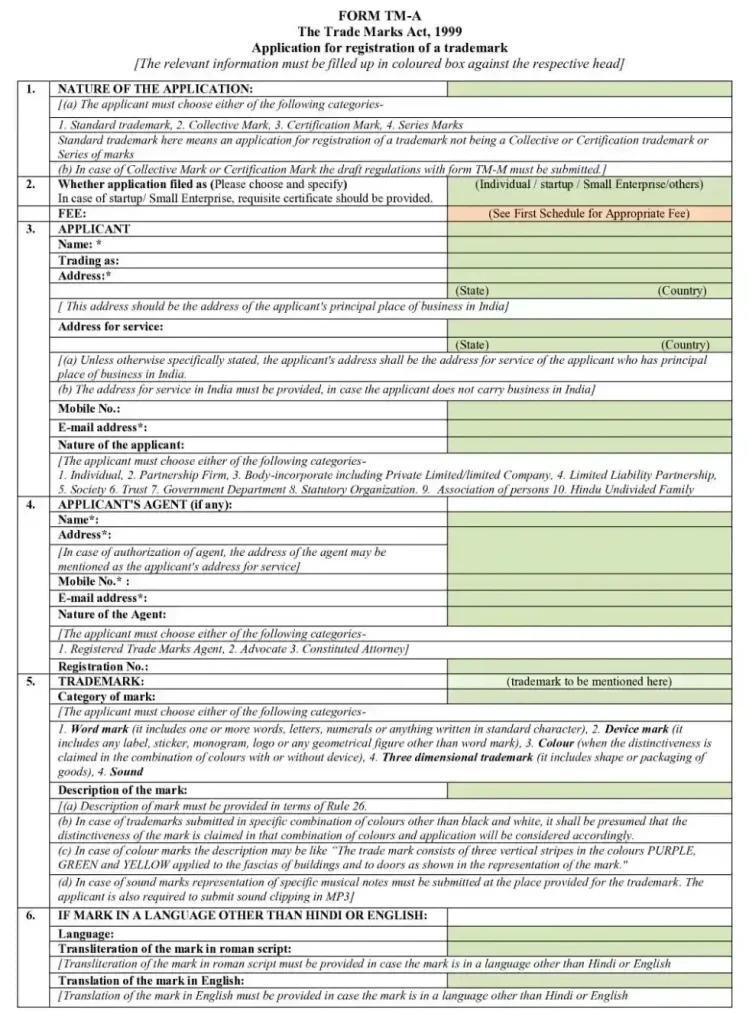
- File Form TM-A: Submit the application through the IP India Trademark Portal and select Class 8 for the relevant goods.
- Pay the government fee: The e-filing fee is ₹4,500 per class for individuals, startups, and small enterprises and ₹9,000 per class for other applicants.
- Choose single or multiple classes: A single-class application covers Class 8 goods. A multi-class application can include Class 8 along with other relevant classes.
- Complete examination: The Trademark Registry examines the application for classification, compliance, and conflicts with existing marks. It may issue an Examination Report if it finds an objection.
- Respond to objections: If the Registry objects, submit a response within the deadline stated in the Examination Report or notice.
- Publication in the Trademark Journal: If the application is accepted, the Registry publishes it in the Trademark Journal. Third parties can oppose the application within four months of publication.
- Receive registration: If no opposition is filed, or the opposition is decided in your favour, the trademark proceeds toward registration.
After Registration
- Use the ® symbol: You can use the registered trademark symbol after registration and take action against infringement, subject to the Trade Marks Act, 1999.
- Renew the trademark: Registration remains valid for 10 years and can be renewed for further 10-year periods.
Common Mistakes to Avoid When Registering a Class 8 Trademark
Avoid these common mistakes when filing a Class 8 trademark:
- Choosing the wrong class: Make sure your products belong to Class 8 and not another class.
- Using vague descriptions: Clearly list your products instead of using broad terms like “tools” or “hardware.”
- Skipping a trademark search: Check existing marks to avoid conflicts and objections.
- Missing deadlines: Respond to examination reports and opposition notices within the applicable deadlines.
- Ignoring future products: Consider planned product expansion when deciding which goods to include.
- Submitting incorrect information: Check the application and supporting documents before filing.
