SSI Registration Online in India for Small Businesses
Register your Small Scale Industry (SSI) online in India with RegisterKaro’s expert guidance. Focus on growing your business while we handle the legal process, compliance, and documentation smoothly.
 Complete SSI/MSME Registration SupportAccurate & Verified Document FilingFast Processing with Real-Time UpdatesLegal Compliance & MSME Advisory100% Online, Paperless Execution

 What Sets Us ApartWhat Sets Us Apart
Overview of SSI Registration in India
While 'SSI Registration' is a commonly searched term, it's important to know that the process has been updated. Today, all registrations for small businesses fall under the modern, unified SSI (Udyam) Registration system.
Small-scale industries (SSI) have always played a vital role in India's economic growth. These businesses operate on a smaller scale and are involved in manufacturing, production, and service delivery. The Indian government continues to promote SSIs to generate employment, especially in rural and remote areas, and to encourage the use of local resources.
SSIs contribute significantly to exports, local job creation, and balanced regional development. To support and organize small businesses better, the government created the Ministry of Small-Scale Industries in 1999. In 2007, this ministry merged into the Ministry of Micro, Small and Medium Enterprises (MSME).
Today, India has over 1 crore registered MSMEs, employing 7.5 crore people across the country. These enterprises contribute 36% of India's manufacturing output and account for 45% of total exports, making them a vital force in the economy.
This evolution shows the government's long-term commitment to small businesses. It reflects a clear effort to simplify support systems and align them with broader economic goals.
What was SSI Registration?
Before the Udyog Aadhaar system, registering as a Small Scale Industry (SSI) was a complicated process. Entrepreneurs had to file two separate documents:
- Entrepreneur Memorandum-I (EM-I)
- Entrepreneur Memorandum-II (EM-II).
State District Industry Centers (DICs) managed this manual registration process. This manual process was time-consuming, and confusing, and often led to delays.
To address these issues, the government later introduced an online filing system for EM-I and EM-II. This move was part of a broader effort to simplify bureaucratic procedures and make business registration easier. It marked the beginning of India’s shift toward digitizing MSME services, leading to the more streamlined systems we use today, like Udyog Aadhaar and now SSI (Udyam) Registration.
Udyam: The New and Only Way for MSME Registration in India
SSI (Udyam) Registration officially replaced Udyog Aadhaar in 2020. It is now the mandatory and only recognized system for MSME registration in India. The government has streamlined everything through its official portal – udyamregistration.gov.in.
This system is:
- Fully online, paperless, and free of cost
- Based on self-declaration, with no document upload required
- Linked with the Income Tax and GST networks, so business data (investment and turnover) is automatically retrieved
In 2020, the MSME classification was also updated. It now uses a combined formula, both investment in plant & machinery/equipment and annual turnover, for all businesses, whether manufacturing or service-based.
This change was made to:
- Adjust for inflation and economic growth
- Allow more businesses to fall under the MSME category
- Make policy benefits accessible to a larger base of small enterprises
Why You Must Migrate Your Old SSI or Udyog Aadhaar to Udyam?
Migrating to SSI (Udyam) Registration is mandatory to continue receiving government support. Businesses registered under Udyog Aadhaar were required to migrate by December 31, 2021. Those that failed to migrate had their registrations declared invalid.
SSI (Udyam) Registration offers improved support and recognition. If you don’t migrate, your business may lose access to:
- Government schemes and subsidies
- Lower-interest loans and financial aid
- Tax benefits and startup support
- Priority in public tenders and vendor approvals
The government also benefits from this change through:
- Easier identification and tracking of registered MSMEs
- Better data for policymaking and targeted schemes
The migration process is online and simple:
- Go to the official Udyam portal: udyamregistration.gov.in
- Choose the option: “For those already having registration as UAM”
- Enter your Udyog Aadhaar Number
- Verify using the OTP sent to the mobile number linked to your Aadhaar
- Enter your PAN and GSTIN (if available)
- Submit the form and receive your SSI (Udyam) Registration Number and e-certificate via email.
Who is Eligible for SSI (Now Udyam) Registration?
SSI (Now Udyam) Registration is open to all businesses that qualify as Micro, Small, or Medium Enterprises (MSMEs) under Indian law. Eligible business structures include:
- Sole proprietorships (single-owner businesses)
- Partnerships (co-owned firms)
- Hindu Undivided Families (HUFs)
- Private Limited Companies
- Public Limited Companies
- Limited Liability Partnerships (LLPs)
- Registered Societies and Trusts
Eligibility is based on a composite criterion, both:
- Investment in plant, machinery, or equipment, and
- Annual turnover of the business
If either of these exceeds the MSME limits, the business is not eligible for SSI (Udyam) registration.
Foreign businesses operating in India may have different requirements depending on their structure and local compliance rules.
Updated SSI/MSME Classification Criteria
| Type of Enterprise | Investment in Plant & Machinery/Equipment | Annual Turnover |
| Micro Enterprise | Up to ₹1 crore | Up to ₹5 crore |
| Small Enterprise | Up to ₹10 crore | Up to ₹50 crore |
| Medium Enterprise | Up to ₹50 crore | Up to ₹250 crore |
Benefits of SSI Registration in India
SSI (Now Udyam) registration offers a wide array of benefits for small businesses. These advantages span financial support, operational cost reduction, and enhanced market access.
Financial Support
Businesses can access bank loans at lower interest rates. Many banks offer more favorable rates than conventional loans. MSMEs are also eligible for priority sector lending, which makes securing credit easier. Collateral-free loans are also available, supported by the Credit Guarantee Fund Scheme.
Businesses can carry forward Minimum Alternate Tax (MAT) credits for up to 15 years as per Income Tax laws (FY 2024–25). This is a five-year extension from the standard period. They can also avail of a one-time settlement scheme for unpaid amounts. This helps businesses navigate challenging financial situations.
Operational & Cost Advantages
SSI registration can lead to reduced electricity expenses, as some state governments offer subsidies on electricity bills. Businesses can receive a substantial 50% subsidy on patent and trademark registration fees. An exemption of 1% interest on Overdraft (OD) facilities is also available under specific schemes (CGTMSE). Registered businesses enjoy tax rebates and exemptions, including excise exemption schemes.
Market Access & Credibility
Udyam-registered businesses receive priority consideration in government tenders and contracts. This links them to state and central marketplaces. They gain official recognition and enhanced business credibility, which makes securing partnerships easier. Assistance with delayed payments is also provided through integration with the TReDS & MSME SAMADHAAN Portal.
Documents Required for SSI Registration in India
The SSI registration process is self-declaration-based & generally does not require uploading physical documents. The system fetches details automatically from various government databases.
Key Information Needed for SSI Registration
While document upload is minimal, certain key information is essential for SSI registration:
- Aadhaar Card: One of the most important is the Aadhaar Card, which must be linked to a mobile number for OTP verification.
The Aadhaar requirement depends on the type of business:
-
- Proprietorship: Aadhaar of the proprietor
- Partnership Firm: Aadhaar of the managing partner
- Hindu Undivided Family (HUF): Aadhaar of the Karta
- Company or LLP: Aadhaar of the authorized signatory
Make sure the mobile number linked to the Aadhaar is active, as you’ll need to verify it with an OTP during registration.
- PAN Card: This is mandatory for all enterprises, including proprietorships, from April 1, 2021.
- GSTIN: This is required if the business is GST-registered.
- Bank Account Details: Provide the business's bank account number and IFSC code.
- Business Address Proof: This is needed for verification (e.g., rent agreement, electricity bill, or property tax receipt).
- Certificate of Incorporation/Partnership Deed: This is required for registered companies or LLPs.
- NOC from Landlord: This is needed if operating from a rented property.
- Main Business Activity & NIC Code: Describe the core operations and select the relevant National Industry Classification (NIC) code.
- Investment & Turnover Details: These are crucial for MSME classification. The system typically fetches these from IT and GST records.
- Number of Employees: Specify the count, categorized by gender.
How to Register Small-Scale Industries Online?
The SSI registration process is fully online, paperless, and free.
Visit the Official Government SSI (Udyam) Portal
Go to the official SSI (Udyam) Registration portal: udyamregistration.gov.in.
- If you are registering your business for the first time, select: “For New Entrepreneurs who are not registered yet as MSMEs”
- If you already have an EM–II or Udyog Aadhaar (UAM), select: “For those already having registration as EM–II or UAM”
Verify Aadhaar and Name with OTP
Enter the Aadhaar number and name exactly as they appear on the Aadhaar card. Click "Validate & Generate OTP." An OTP will be sent to the Aadhaar-linked mobile number. Enter the OTP to validate the details.
Validate PAN for Your Enterprise
Enter the PAN number. The system will then verify it automatically. PAN became mandatory for most entities on April 1, 2021.
Fill out the Main SSI (Udyam) Registration Form
Provide essential business details. This includes the business name, type of organization, and full address. Select the social category and main business activity (NIC Code).
Enter Business, Bank, and Employment Details
Input the business bank account number and IFSC code. Provide the date of business commencement. Specify the number of employees, categorized by gender. Investment and turnover details are often auto-fetched. Ensure they align with IT and GST records.
Submit the Application and Receive the Final OTP
Review all entered information carefully for accuracy. Tick the terms and conditions checkbox. Click "Submit Application." A final OTP will be sent to the registered mobile number for confirmation.
Get Your SSI (Udyam) Registration Number
Upon successful submission and verification, the business will receive its SSI Registration Number (URN). An e-certificate will be sent to the registered email ID.
SSI Registration Fees
Registering your business under the SSI (now Udyam) system is not only simple but also cost-effective. Understanding the fee structure helps businesses avoid unnecessary expenses and stay informed about legitimate costs.
Government Charges
SSI Registration is provided at no cost through the official government portal. If any website or agency demands a fee for the registration itself, it is not an authorized government platform.
Professional Service Costs
Private consultancy services offer assistance with SSI registration. They charge professional fees for their services. These private entities are not directly affiliated with the government.
The government's declaration that SSI registration is free aims to maximize participation.
How to Track or Verify Your SSI Registration Status?
To track or verify your SSI (Udyam) Registration status, you can follow these simple steps using the official government portal:
- Visit the Official Portal: Go to the SSI (Udyam) Registration Verification page maintained by the Ministry of MSME.
- Enter Your SSI (Udyam) Registration Number (URN): This is the unique ID you received after registering.
- Provide Registered Mobile Number: An OTP will be sent to this number for authentication.
- Enter OTP and Submit: Once verified, your registration details and certificate status will be displayed.
Alternate Tracking Options
If you registered through a third-party service, you might need to use their tracking system:
- eUdyam Tracking Page: Requires your order ID to check progress.
- UdyamRegistrations.co.in: Also uses order ID for status updates.
How to Verify SSI Registration Number?
One can easily verify an SSI (Udyam) Registration Number online. This confirms its authenticity.
Steps to Verify:
- Visit the Official SSI (Udyam) Registration Portal: Go to udyamregistration.gov.in.
- Navigate to "Print & Verify": On the homepage, find and click this tab.
- Select "Verify Udyam Registration Number": Choose this option from the dropdown menu.
- Enter Details: Input the Udyam Registration Number (URN) and complete the captcha verification.
- Click "Verify": The system will display the business details if the URN is valid.
How to Download Your SSI Registration Certificate?
One can download the SSI (Udyam) Registration Certificate online after receiving the SSI Number.
Here are the steps to download:
- Visit the Official SSI (Udyam) Registration Portal: Go to udyamregistration.gov.in.
- Navigate to "Print/Verify": Click on this section.
- Choose "Print SSI (Udyam) Certificate": Select this option.
- Enter Details: Provide the SSI (Udyam) Registration Number (URN) or PAN, and the mobile number linked to the registration.
- Enter OTP: An OTP will be sent to the registered mobile number for validation.
- Download Certificate: Once validated, the certificate can be downloaded and printed.
How to Update or Edit Details in SSI Registration?
One can update or edit details in the SSI Registration Certificate online.
Steps to Update:
- Visit the SSI (Udyam) Registration Portal: Go to the official website.
- Select 'Update SSI (Udyam) Registration': Navigate to this section.
- Enter Your SSI (Udyam) Registration Number (URN): Provide the unique number.
- Modify Details: Various business details can be updated.
- Submit Updated Information: Review and submit the form.
- Confirmation & Delivery: A confirmation will be received, and the updated certificate sent to the registered email.
Details That Can Be Updated:
- Business turnover and scale of operations
- Change in business structure (e.g., proprietorship to partnership)
- Modification in product or service offerings
- Change in ownership or legal entity (only if PAN remains the same)
- Registered mobile number and email address
- Plant or unit details and address (except state or district)
- Bank account details (account number, IFSC code, etc.)
- Industrial activity details (NIC codes – up to 10 codes allowed)
- Annual update of ITR and GSTR filing status for the previous financial year
Details That Cannot Be Updated:
- PAN of the organization
- Aadhaar number of the applicant or entrepreneur
- Name of the applicant or entrepreneur
- Registered office address, if it involves a change in state or district (In such cases, a new registration is required)
Connect with RegisterKaro and let our experts handle the legal hassle while you grow your business.
Frequently Asked Questions (FAQs)
What is SSI Registration, and Who Can Apply?
−SSI Registration is the official online process for registering Micro, Small, and Medium Enterprises (MSMEs) in India. It is free, paperless, and has replaced Udyog Aadhaar. Any Indian business that qualifies as a Micro, Small, or Medium Enterprise can apply. This includes proprietorships, partnerships, HUFs, LLPs, private limited companies, societies, and trusts. Eligibility is based on investment in plant/machinery and annual turnover.
Is SSI Registration still valid in India?
+Is there a fee for SSI Registration?
+Can a single person register multiple businesses on SSI?
+How long does it take to receive the SSI (Udyam) certificate?
+Do I need to renew my SSI (Udyam) certificate annually?
+What are the benefits of SSI Registration?
+What documents are required for SSI Registration?
+What happens if I enter the wrong details in SSI Registration?
+Can I update my SSI Registration after submission?
+What is the investment and turnover limit for MSMEs?
+Can foreign companies apply for SSI Registration?
+How to check the status of my SSI (Udyam) Registration?
+
Reviewed by
Joel DsouzaJoel Dsouza is a Chartered Accountant (CA) and compliance expert with over 7 years of hands-on experience in company registration, tax structuring, GST, ROC filings, and MCA compliance. As a qualified member of the Institute of Chartered Accountants of India (ICAI) and Co-Founder at RegisterKaro, he has personally advised more than 1,000 startups and SMEs across India, helping founders navigate incorporation, regulatory frameworks, and financial planning from Day 1. With deep expertise across all three levels of Finance and Portfolio Management, Joel is committed to promoting financial literacy and simplifying India's startup ecosystem through clear, actionable guidance that entrepreneurs can act on immediately.
Why Choose RegisterKaro for Your SSI Registration?
Here’s why RegisterKaro is the best platform to register your SSI/MSME in India:
- Expert Guidance: Avoid errors and rejections with expert-led, fully compliant SSI (Udyam) registration.
- Fast & Hassle-Free: We handle the entire process online with quick turnaround, so you can stay focused on your business.
- End-to-End Support: From document collection to certificate delivery, we manage everything with real-time updates.
- Trusted by Thousands: Thousands of Indian entrepreneurs trust us for quick, reliable, and professional SSI/MSME registration.

What Our Clients Say
View All
Rutwik Patil
 Verified
I would recommend registerkaro to all my peers for registering a business in India. Moving on from the aged old stereotypical approach of submitting d... Read more

Rrr Sss
VerifiedSneha has done an exceptional job in incorporating SRIDURGA SILK HOUSE (OPC) PRIVATE LIMITED with remarkable precision and professionalism. Her dedica... Read more

MAYUR KAKADE
VerifiedRegisterKaro has been an absolute game-changer for managing all our company's filings and legal requirements. From company incorporation to annual com... Read more

Kesha Ram
VerifiedRegister Karo is a company carryout all task which you demand from Registeration process to final compliance of commencement of the new company. My e... Read more

Jit
VerifiedRegister Karo is the best platform to register your company, @kajal chowhan helped me a lot, to make the process smoothly. Thank you team registerkaro

Guru
Verifiedprofessional work, good team work by the team allocated to us, on time delivery for incorporation of my company, Ankit followed a good workflow throug... Read more

yayati
VerifiedI reached out to registerkro for company windup. Would like to give shout out to Astha gupta who was extremly helpful throughout the process. Kudos to... Read more

Vijay Azad
VerifiedHi It was pleasure to contact you@alka for company registration .Happy with the dedication and support during process and working beyond timeline...

aravind raj
VerifiedWe did startup registeration with their team, it was point to point approach and they were clear in those procedures and their followup is too good...

vinay kumar
VerifiedYour staff Ankita Matta is a polite person the way of handling the issues was good. I hope in future register karo team handle the issues in a same wa... Read more
Related Blogs
View All
POSH Policy: Meaning, Applicability, Provisions & Sample Format

Who Appoints First Auditor of a Company? Section 139 Guide

POSH Compliance Checklist in India: Complete Employer Guide

POSH Complaint in 2026: Process, Form & Resolution Guide

What is POSH Training: Full Form & Legal Requirements 2026

POSH Committee: Formation, Rules, Format, and Compliance
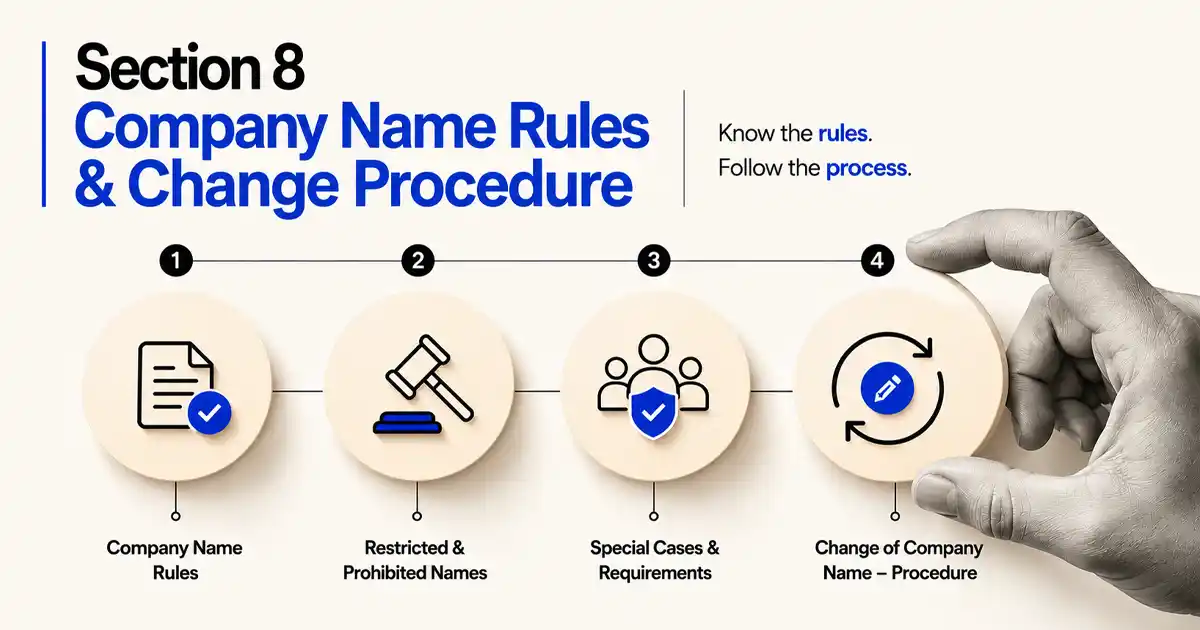
Section 8 Company Name Rules and Change Procedure in India

Prevention of Sexual Harassment at Workplace Act: Rules and Compliance
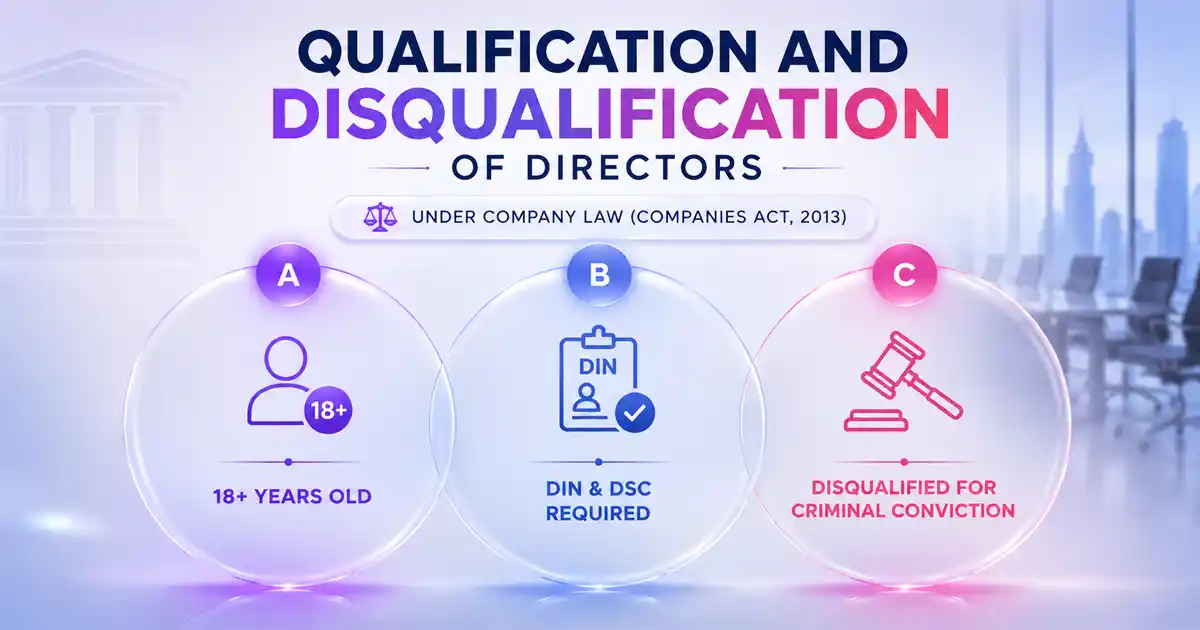
Qualification and Disqualification of Directors Under Companies Act, 2013
RegisterKaro vs Vakilsearch: Compliance Platform Compared in 2026