SOFTEX (Software Export) Filing in India
Manage your SOFTEX filing with expert support from RegisterKaro. Stay compliant with RBI and STPI regulations while ensuring accurate and timely software export reporting.
 Accurate Preparation & Verification of SOFTEX DocumentsExpert Guidance on Export Valuation & Compliance RequirementsError-Free Filing on Software Technology Parks of India PortalEnd-to-End Support for Submission, Verification & CertificationReal-time Tracking Until SOFTEX Form Approval

 What Sets Us ApartWhat Sets Us Apart
What is SOFTEX (Software Export) Filing?
SOFTEX filing is a mandatory reporting mechanism for software exports, certified by Software Technology Parks of India (STPI) or Special Economic Zone (SEZ) authorities. It allows Indian IT companies to report software exports to the Reserve Bank of India (RBI). This process helps companies comply with foreign exchange regulations. SOFTEX mainly applies to companies exporting software products or IT services abroad.
A licensed software exporter works under a defined regulatory framework governed by RBI and STPI/SEZ authorities. They promote transparency in software export transactions and protect the company’s legal and financial interests. Exporters must follow STPI and RBI guidelines and maintain proper records of all export contracts. They also verify details such as customer information and contract value before submitting the SOFTEX form.
Regulatory Authorities for SOFTEX Filing in India
The key authorities for SOFTEX filing ensure that software exports from India are transparent, legal, and compliant with government regulations.
The main regulatory authorities include:
- Software Technology Parks of India (STPI): Manages online submission of SOFTEX forms and verifies all export details.
- Reserve Bank of India (RBI): Monitors foreign exchange transactions related to software exports.
- Authorised Dealer (AD) Banks: Receive certified SOFTEX forms from exporters and report the export proceeds to the RBI.
- Ministry of Electronics and Information Technology (MeitY): Provides oversight for IT exports and ensures exporters follow the legal framework.
In summary, these authorities regulate SOFTEX filing to maintain transparency, proper record-keeping, and compliance. They ensure companies can export software legally while protecting their financial and legal interests.
Purpose of SOFTEX Filing in India
The purpose of SOFTEX filing is to regulate and monitor software exports from India in a structured and lawful manner.
The key purposes of SOFTEX filing are:
- To ensure compliance with RBI and STPI regulations.
- To track and verify all software export contracts.
- To maintain transparency in export transactions.
- To protect the legal and financial interests of exporters.
- To enable companies to claim export-related incentives and benefits.
- To create accountability in reporting export proceeds.
In summary, SOFTEX filing ensures regulated and transparent software exports. Moreover, filing SOFTEX forms helps companies operate legally while safeguarding their business and financial interests.
Who Needs SOFTEX Filing in India? Applicability for SOFTEX Filing
The STPI and RBI require software exporters to file SOFTEX forms to prevent illegal exports and track foreign payments. They also ensure proper tax and regulatory compliance.
The following entities must submit SOFTEX forms to maintain regulatory adherence:
- STPI-Registered Exporters: Companies registered under the STPI exporting software or IT services must file SOFTEX forms.
- IT Startups and Firms: Startups and IT companies delivering software products or services to foreign clients are required to submit SOFTEX filings.
- Exporters Claiming Incentives: Companies availing government export incentives for software exports must complete the SOFTEX filing.
- Companies Receiving Foreign Payments: Any company receiving payments in foreign currency for software exports must submit SOFTEX forms to comply with RBI regulations.
- Diverse Legal Structures: Not only private and public companies, but also LLPs, partnership firms, and other non-individual entities exporting software must file SOFTEX forms if they meet the export criteria.
- SEZ Units (Special Economic Zones): Units operating in Special Economic Zones (SEZ) must file SOFTEX forms through designated SEZ authorities. These authorities perform functions similar to STPI for certification and compliance.
In summary, any Indian company or entity engaged in software exports or receiving foreign payments for software services needs to complete the SOFTEX filing.
Benefits of SOFTEX Filing for Indian Exporters
SOFTEX filing provides a legal and structured way for Indian software exporters to report and manage their software exports. Key advantages of SOFTEX filing include:
- Legal Compliance: Filing SOFTEX forms ensures adherence to RBI and STPI regulations. It helps companies operate within the legal framework and avoid penalties.
- Enhanced Credibility: SOFTEX filing builds trust with clients and authorities. It demonstrates that your business follows government rules and professional practices.
- Access to Export Benefits: Proper SOFTEX filing enables companies to claim government incentives and export-related benefits. This supports business growth and international opportunities.
- Financial Security: Filing SOFTEX ensures that foreign payments are tracked and received correctly. It protects exporters from delays or disputes in export proceeds.
- Structured Operations: Maintaining SOFTEX records improves transparency and organisation. It allows for smoother audits and regulatory reporting.
- Business Reputation: Compliance with SOFTEX regulations enhances your professional image. It signals reliability and legal accountability to clients and partners.
- Reduced Legal Risks: Filing SOFTEX forms lowers the risk of fines, legal action, or export penalties. It ensures your operations remain safe and compliant.
Overall, SOFTEX filing strengthens legal compliance, promotes transparency, and supports long-term growth for software exporters in India.
Documents Required for SOFTEX Filing
SOFTEX filing in India requires submitting specific documents to the Software Technology Parks of India (STPI) to report software exports and comply with RBI regulations.
Essential Documents
These documents are required for nearly every SOFTEX filing application:
- Company Registration Certificate, serving as verification of the company’s legal existence and official address.
- PAN Card of the Company for primary identification and tax verification within India.
- STPI Registration Certificate, issued by the Software Technology Parks of India and mandatory for all exporters.
- A GST Registration Certificate is required to ensure compliance with tax regulations.
- Memorandum of Association (MoA) and Articles of Association (AoA) to define the company’s structure, objectives, and operations.
- Bank Certificate/Account Proof verifying the company’s bank account for receiving export proceeds.
- Registered Office Address Proof, such as utility bills, lease agreements, or other valid address documents.
- Authorised Signatory KYC Documents like PAN card, Aadhaar, passport, or voter ID of the person applying.
- Board Resolution or Authorisation Letter approving the representative submitting the SOFTEX filing.
Additional Documents
Depending on your company type or specific export requirements, you may also need:
- Partnership Deed or LLP Agreement for partnerships or LLPs, confirming ownership and partner details.
- Trust Deed, if the exporter is a trust.
- Audited Financial Statements to verify the company’s financial position when requested.
- Regulatory Licenses or Permits for companies operating in regulated sectors, if applicable.
- Parent Company Details for ownership verification in subsidiaries or group companies, if applicable.
- Technical Project Report outlining the nature of software services provided and a brief company profile.
- Export Contract or Purchase Order as proof of an active agreement with a foreign client.
These documents verify the company’s identity, export legitimacy, financial stability, and compliance with legal and regulatory requirements.
How to File SOFTEX Forms? Step-by-Step Process
The SOFTEX filing procedure in India follows a structured process set by the Software Technology Parks of India (STPI). Follow these steps to report software export transactions through the STPI portal:
Step 1: Register on the STPI Portal
- Create an account on the official STPI SOFTEX portal.
- This portal allows you to submit and track SOFTEX forms online.
Estimated Timeline: 1 day
Step 2: Fill the SOFTEX Application Form
- Enter complete details of the export transaction in the online form.
- Provide information such as client details, software description, and contract value.
Estimated Timeline: 1–2 days
Step 3: Upload Required Documents
- Upload invoices, agreements, and supporting documents on the portal.
- Make sure all documents are clear and match the details entered in the form.
Estimated Timeline: 1–2 days
Step 4: Submit the SOFTEX Form
- Submit the completed SOFTEX form for verification.
- Review all details carefully before final submission to avoid errors.
Estimated Timeline: 1 day
Step 5: Verification by STPI
- STPI reviews the submitted form and verifies the export details.
- They may request additional information or clarification if required.
Estimated Timeline: 5–10 days
Step 6: Certification of SOFTEX Form
- After successful verification, STPI certifies the SOFTEX form.
- This certification confirms the validity of the export transaction.
Estimated Timeline: 3–5 days
Step 7: Submission to RBI through the Bank
- Submit the certified SOFTEX form to your authorised dealer bank.
- The bank reports the export proceeds to the RBI.
Estimated Timeline: 5–7 days
Following these steps helps you complete the SOFTEX filing procedure smoothly. It supports compliance with RBI regulations and allows the timely realisation of export proceeds.
SOFTEX Filing Fees in India
The cost of SOFTEX filing in India is not fixed by a single authority. It depends on STPI registration charges, annual service fees based on export turnover, and professional assistance. Government-related charges mainly come from the STPI, while additional costs arise from documentation and compliance support.
Below is the typical cost breakdown for SOFTEX filing in India:
| Fee Component | What It Covers | Estimated Cost (Rs.) |
| STPI Registration Fees | One-time registration for non-STPI units | Around 1,000 + GST |
| Annual STPI Charges | Based on export turnover | 4,000 – 6,50,000+ |
| SOFTEX Form Processing | Submission and certification of forms | Nominal / Included in STPI charges |
| Documentation Charges | Preparation and verification of export documents | 1,000 – 5,000 |
| Professional Fees (Consultant/CA/CS) | Filing, compliance, and follow-ups | 2,000 – 20,000+ |
| Bank Charges | Forex handling and RBI reporting | As per the bank |
| Miscellaneous Charges | Admin and portal-related expenses | 500 – 2,000 |
The SOFTEX filing costs mentioned above are indicative and may vary depending on export volume, STPI centre, and regulatory updates. The exact amount depends on the company’s turnover and the number of SOFTEX forms filed.
Pro Tip: Companies with high export volumes should opt for professional assistance. It improves accuracy, reduces delays, and helps maintain consistent compliance with STPI and RBI requirements.
Timeline and Validity of SOFTEX Filing
Generally, SOFTEX forms must be submitted within a fixed period from the date of the export invoice. Companies must also complete verification and reporting to continue operating smoothly under RBI regulations.
- Filing Timeline: SOFTEX forms are generally filed within 30 days, but timelines may vary based on STPI/SEZ guidelines and contract structure.
- Verification Process: STPI verifies the submitted SOFTEX forms and may request clarification if required. This step confirms the accuracy of export data.
- Validity of SOFTEX Form: A SOFTEX form remains valid until the export proceeds are realised and reported through the authorised dealer bank to the RBI.
- Delay in Filing: Companies must submit delayed filings with proper justification. Late submission may lead to compliance issues or additional approvals.
- Ongoing Compliance: Exporters must track foreign remittances and maintain proper records. This helps in smooth reporting and audit processes.
Overall, timely SOFTEX filing and proper tracking help maintain continuous export operations and avoid penalties or compliance issues.
SOFTEX Return Filing and Compliance in India
SOFTEX return filing was a mandatory compliance requirement for software exporters in India. Now, it is managed through the Unified Export Declaration Form (EDF), which consolidates reporting for all software export transactions. Companies must submit the EDF after each export to report the value of software exports to the authorities.
This process helps monitor foreign exchange inflows and ensures compliance with RBI regulations. Timely and accurate submission reduces the risk of penalties, payment delays, and other compliance issues.
Key compliance requirements for EDF filing include:
- File EDF for Each Export: Companies must submit an EDF for every software export transaction to track all export activities properly.
- Accurate Declaration of Export Details: Exporters must provide correct information about contract value, client details, and payment terms to avoid discrepancies during verification.
- Timely Submission: EDFs must be submitted within prescribed timelines. Late filing may cause delays in remittances and regulatory concerns.
- Maintain Proper Documentation: Exporters should keep invoices, agreements, and related records to support verification and audits.
- Monitor Export Proceeds: Companies must track foreign remittances against EDF filings to ensure payments match declared export values.
Failure to comply with EDF requirements may delay foreign remittances and lead to non-compliance with RBI guidelines.
Verification and Certification of SOFTEX Forms
After submission, the designated authority, such as STPI or SEZ officials, verifies the SOFTEX form. They then issue the certification once all details are correct.
- Authorities review the submitted details for accuracy and consistency.
- They examine supporting documents such as invoices and agreements.
- Exporters must correct any errors or provide clarification if required.
- Once verified, the authority certifies the SOFTEX form.
This certification confirms that the export transaction is valid. It allows proper tracking of export proceeds through the banking system. SOFTEX Form also supports compliance with foreign exchange regulations in India.
Penalties for Non-Compliance with SOFTEX Regulations
Non-compliance with SOFTEX regulations can lead to serious legal and financial consequences for software exporters in India. Authorities closely monitor export reporting and foreign exchange transactions. Key penalties include:
- Monetary Penalties: Exporters may face financial penalties for incorrect, delayed, or non-filing of SOFTEX forms. The penalty amount depends on the nature and severity of the violation. Repeated non-compliance may result in higher fines.
- Delays in Foreign Remittances: Banks may delay or withhold foreign exchange remittances if SOFTEX filings are incomplete or not certified. This can disrupt cash flow and business operations.
- Regulatory Action by RBI: The RBI may initiate action under FEMA regulations for non-compliance. This can include notices, investigations, and penalties for violating foreign exchange rules.
- Rejection or Re-submission of SOFTEX Forms: Authorities such as STPI or SEZ may reject SOFTEX forms if discrepancies are found. Exporters must correct errors and resubmit forms within the specified time, causing delays.
- Compliance Audits and Scrutiny: Frequent errors or non-compliance may trigger detailed audits by regulatory authorities. This increases administrative burden and scrutiny on business operations.
- Impact on Export Credibility: Non-compliance can affect the company’s reputation with banks, clients, and authorities. It may reduce trust and create difficulties in future transactions.
- Legal Consequences: In serious cases, exporters may face legal proceedings under FEMA. This may include penalties, restrictions on operations, or other enforcement actions.
Overall, failure to comply with SOFTEX regulations can lead to financial penalties, payment delays, regulatory scrutiny, and legal risks. Timely and accurate filing is essential to maintain smooth export operations and regulatory compliance.
SOFTEX Filing Certificate in India
The SOFTEX Filing Certificate is an official document confirming that a software export transaction has been successfully verified and certified by the designated authority, such as STPI or SEZ. The certificate acts as proof that the export details are recorded and comply with foreign exchange regulations set by the RBI.
This certificate typically includes key details such as the exporter’s name, invoice details, export value, date of certification, and issuing authority. Authorised banks, regulators, and other stakeholders may request this certificate as evidence of a valid SOFTEX filing and compliance with export reporting requirements.
Connect with RegisterKaro and let our experts handle the legal hassle while you grow your business.
Frequently Asked Questions (FAQs)
What is SOFTEX filing, and why is it required in India?
−SOFTEX filing is the process of reporting software export transactions to STPI and RBI, and it is required to ensure compliance with foreign exchange regulations. It helps authorities track export earnings and verify that companies receive payments correctly. Without SOFTEX filing, businesses may face issues in receiving foreign remittances and maintaining legal compliance in export operations.
Who is required to file SOFTEX forms in India?
+What is the time limit for filing SOFTEX forms?
+What documents are required for SOFTEX filing?
+What happens if the SOFTEX filing is not done on time?
+Is SOFTEX filing mandatory for freelancers in India?
+How long does the SOFTEX filing process take?
+What is the role of STPI in SOFTEX filing?
+Can SOFTEX forms be revised after submission?
+Why should businesses take professional help for SOFTEX filing?
+
Reviewed by
Joel DsouzaJoel Dsouza is a Chartered Accountant (CA) and compliance expert with over 7 years of hands-on experience in company registration, tax structuring, GST, ROC filings, and MCA compliance. As a qualified member of the Institute of Chartered Accountants of India (ICAI) and Co-Founder at RegisterKaro, he has personally advised more than 1,000 startups and SMEs across India, helping founders navigate incorporation, regulatory frameworks, and financial planning from Day 1. With deep expertise across all three levels of Finance and Portfolio Management, Joel is committed to promoting financial literacy and simplifying India's startup ecosystem through clear, actionable guidance that entrepreneurs can act on immediately.
Why Choose RegisterKaro for SOFTEX Filing?
RegisterKaro makes SOFTEX filing simple, accurate, and stress-free. We help software exporters stay compliant with RBI regulations and manage export reporting smoothly.
- Fast Online Filing: Complete your SOFTEX filing process online without visiting multiple offices. Save time and manage submissions efficiently.
- Expert Guidance: Get professional support for SOFTEX documentation, valuation, and submission. Our experts help you avoid errors and reduce rejection risks.
- End-to-End Support: We handle the entire process, including documentation, filing, follow-ups, and certification. This keeps your export operations fully compliant.
- Accurate Documentation: We ensure all invoices, agreements, and export details are correctly prepared and submitted. This improves approval speed and accuracy.
- Transparent Pricing: Our pricing is clear and upfront. You get complete visibility on costs with no hidden charges.
- Compliance Assurance: We help you meet RBI and STPI/SEZ requirements consistently. This reduces the risk of penalties and delays in foreign remittances.
Choose RegisterKaro for reliable SOFTEX filing and focus on growing your software export business with confidence.

What Our Clients Say
View All
Kesha Ram
 Verified
Register Karo is a company carryout all task which you demand from Registeration process to final compliance of commencement of the new company. My e... Read more

Jit
VerifiedRegister Karo is the best platform to register your company, @kajal chowhan helped me a lot, to make the process smoothly. Thank you team registerkaro

Guru
Verifiedprofessional work, good team work by the team allocated to us, on time delivery for incorporation of my company, Ankit followed a good workflow throug... Read more

yayati
VerifiedI reached out to registerkro for company windup. Would like to give shout out to Astha gupta who was extremly helpful throughout the process. Kudos to... Read more

Vijay Azad
VerifiedHi It was pleasure to contact you@alka for company registration .Happy with the dedication and support during process and working beyond timeline...

aravind raj
VerifiedWe did startup registeration with their team, it was point to point approach and they were clear in those procedures and their followup is too good...

vinay kumar
VerifiedYour staff Ankita Matta is a polite person the way of handling the issues was good. I hope in future register karo team handle the issues in a same wa... Read more

Riya Singh
VerifiedRegister karo demonstrated professionalism and expertise in navigating complex legal and regulatory issues related to our industry. Special thanks Ank... Read more

ganesh patil
VerifiedHad a great experience with Register Karo. The LLP registration process was handled smoothly and everything was explained clearly. Highly recommended!

Ayush
VerifiedReally impressed with the service provided by Prayansh Jindal. He handled everything efficiently and ensured that all my queries were answered promptl... Read more
Related Blogs
View All
RegisterKaro vs Vakilsearch: Compliance Platform Compared in 2026
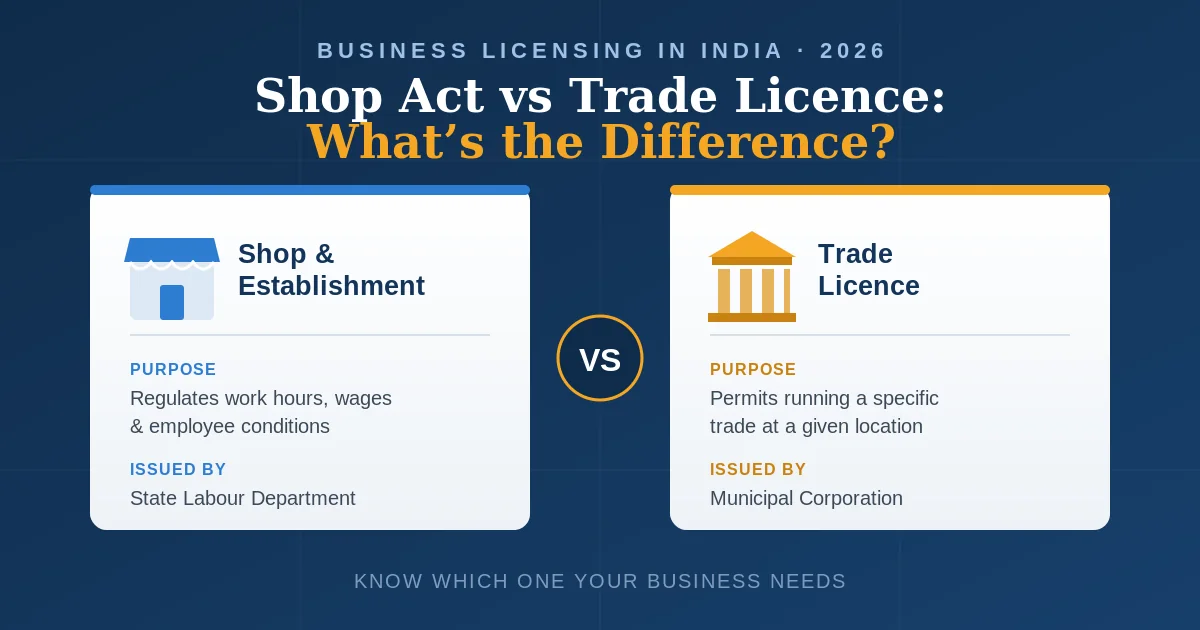
Difference Between Shop and Establishment License & Trade License
How to Apply for GST Registration After Rejection in India

GST Notice Guide: Types, Reasons, Reply Format, and Penalties
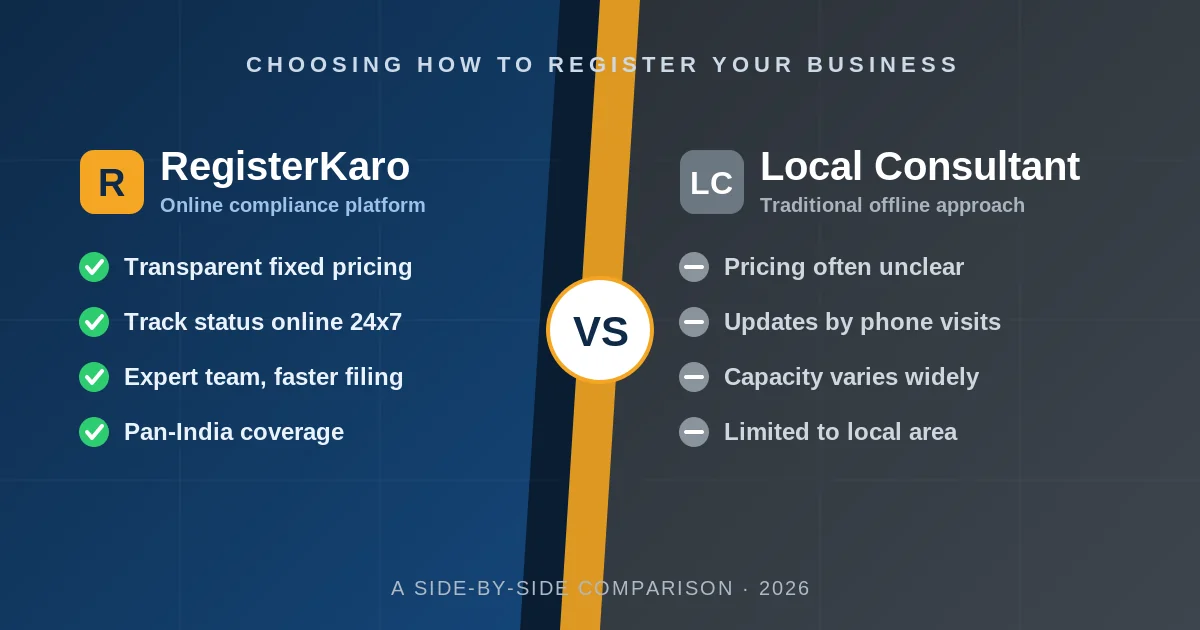
RegisterKaro vs Local Consultant: Which Compliance Partner Should You Pick?

GST for Advertising & Digital Marketing Services 2026 Guide

MCA Company Name Rejection 2026: Reasons, Rule 8 & How to Fix
GST Registration for Export of Services in 2026: Conditions, LUT & Refund

GST for Consultancy Services in India 2026: Rates, SAC Codes & Compliance
How to Reply to GST Registration Notice 2026: REG-04, REG-18 & Format