

Trademark Class 23 covers yarns and threads used in textile and garment manufacturing. These include cotton, wool, silk, and linen yarn, sewing & embroidery thread, and synthetic or blended yarns. Textile mills, garment factories, embroidery units, handloom clusters, and export houses widely use these products. They serve both large-scale textile production and premium fashion, furnishing, and handicraft segments.
India’s textile industry is highly competitive and export-oriented. Trademark registration protects your yarn or thread brand from imitation. It establishes clear legal ownership and strengthens credibility with manufacturers, wholesalers, exporters, and international buyers.
Leading Indian and global textile companies register their yarn and thread brands under Trademark Class 23. Examples include Vardhman Yarns, RSWM (LNJ Bhilwara Group), Raymond (textile yarns), Bombay Dyeing (yarn divisions), and Coats (sewing and embroidery threads).
Key Takeaways
- Class 23 covers yarns and threads made specifically for textile use, spanning natural fibers (cotton, wool, silk, linen, jute), synthetic and blended yarns, and sewing or embroidery threads.
- Class 22 covers raw, unprocessed fibers until manufacturers spin them into yarn. Class 24 covers finished fabric, while Class 25 covers garments made from that fabric.
- Class 26 covers needles, crochet hooks, and hand sewing tools, not Class 23, even though businesses use them with the same materials.
- Spinning, weaving, and sewing machinery belongs to Class 7, separate from the yarn or thread it processes.
- Filing costs ₹4,500 per class for individuals, startups, and MSMEs, and ₹9,000 for companies and other entities.
- Registration typically takes 12–18 months, and validity runs 10 years, renewable indefinitely.
What is Trademark Class 23 in India?
Trademark Class 23 defines a goods category under the Nice Classification system. The World Intellectual Property Organization (WIPO) administers this classification internationally. Class 23 applies to yarns and threads used for textile purposes, including cotton yarn, wool yarn, silk yarn, sewing thread, embroidery thread, and synthetic or blended yarns.
Businesses use Class 23 for yarns and threads supplied to textile manufacturers, garment producers, embroidery units, and other related markets. In India, the Trade Marks Act, 1999 governs Class 23 registrations. The Indian Trademark Registry examines applications based on the nature and intended use of the goods.
The Registry focuses on how the product is used in the textile industry. It does not consider factors such as yarn thickness, fiber count, color, or packaging. Class 23 covers yarns and threads, while fabrics, garments, and other textile goods fall under different trademark classes.
Who Should Register Under Trademark Class 23?
You should register under Trademark Class 23 if your business deals with yarns or threads used in textile manufacturing. This class applies to a wide range of textile-focused businesses:
- Yarn manufacturers producing cotton, linen, synthetic, or blended yarns for textile and garment production.
- Sewing and embroidery thread producers, including specialty and technical thread makers.
- Textile input suppliers feeding mills, handloom units, and embroidery houses, often for export.
- Premium and specialty yarn brands working in organic, eco-friendly, dyed, or luxury segments.
- Importers and exporters moving yarn and thread brands across borders.
- Private label producers manufacturing yarn or thread for fashion houses and retail chains.
- Handloom and artisanal yarn brands supplying regional and craft-based markets.
Which Goods Does Trademark Class 23 Cover?
The table below outlines the main categories and examples of goods covered under Trademark Class 23 in India:
| Category | Examples |
|---|---|
| Textile Yarns | Cotton, wool, silk, linen, jute |
| Synthetic & Blended Yarns | Polyester, nylon, acrylic, viscose, blends |
| Sewing Threads | Garment, upholstery, footwear, and general-purpose sewing thread |
| Embroidery Threads | Decorative and metallic embroidery threads |
| Industrial & Technical Threads | High-strength stitching thread, upholstery and automotive textile thread |
| Knitting & Crochet Yarns | Yarns for knitting, crochet, and related textile work |
| Handloom & Artisanal Yarns | Hand-spun and natural fiber yarns, regional varieties |
| Dyed & Specialty Yarns | Colored yarns and performance-based specialty yarns |
| Elastic Threads | Stretch yarns for garment production |
| Eco-Friendly & Organic Yarns | Organic cotton, recycled fiber, sustainable yarns |
Note: Class 23 covers industrial and technical threads only when manufacturers use them for textile or stitching purposes. A thread built for a non-textile industrial application sits outside Class 23 entirely.
Which Products Does Trademark Class 23 Exclude?
Other trademark classes cover some related products, not Trademark Class 23. These include:
- Raw fiber such as cotton, silk, flax, hemp, and synthetic staple fiber belongs to Class 22.
- Finished fabric such as woven, knitted, or nonwoven cloth, bed linen, curtains, and towels belongs to Class 24.
- Finished garments and apparel belong to Class 25.
- Non-textile industrial fibers such as fiberglass and carbon fiber belong to Class 17 or Class 22.
- Textile machinery such as spinning, weaving, knitting, and sewing machines belongs to Class 7.
- Needles, crochet hooks, and hand sewing tools belong to Class 26.
- Textile dyes, bleaching agents, and finishing chemicals belong to Class 1 or Class 2.
- Non-textile threads used for industrial binding, packaging, or medical sutures fall outside Class 23.
Use RegisterKaro’s Trademark Class Finder if you are unsure which class applies to your product.
How to Register a Trademark Under Class 23 in India?
To register a trademark under Class 23, follow these steps:
- Conduct a trademark search: Check whether your brand name, logo, or yarn/thread product already exists under Class 23. This helps avoid conflicts and objections. Use the official IP India trademark database or RegisterKaro’s trademark availability check tool.
- Select the right goods description: List all yarns and threads you want to protect. This may include sewing threads, embroidery threads, knitting yarns, industrial threads, and specialty yarns. Use accurate descriptions to reduce objections.
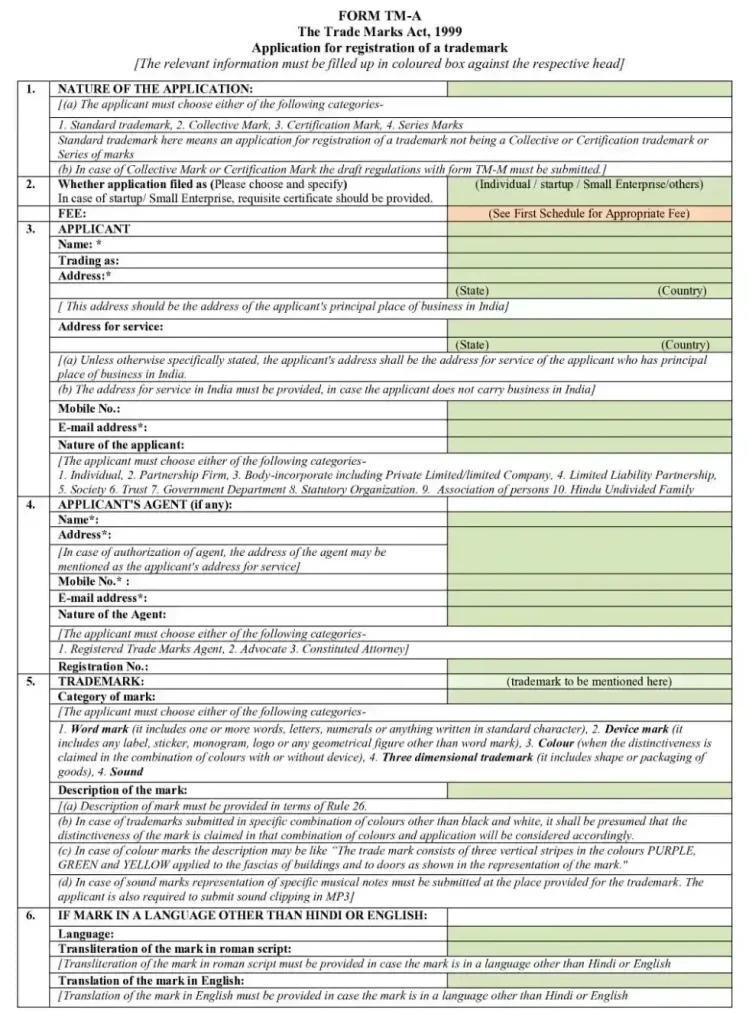
- File Form TM-A: Apply online through the IP India Trademark Portal or file offline at the Trademark Registry. Provide your brand name, logo, product descriptions, and applicant details. The filing fee is usually ₹4,500 for individuals and startups and ₹9,000 for companies.
- Choose the usage status: Select “proposed to be used” if you have not launched your yarns or threads. Select “already in use” if you currently supply them to the market.
- Complete examination: The Trademark Registrar checks your application for errors, similarities, and legal issues. If required, you must respond to the Examination Report within the given timeline.
- Wait for publication: Once accepted, your trademark is published in the Trademark Journal. The public can file objections within four months.
- Complete registration: If no trademark opposition is filed, or all objections are resolved, your mark is registered. You receive a Trademark Registration Certificate and can use the ® symbol.
- Renew the trademark: A trademark is valid for 10 years. You can renew your trademark every 10 years for continued protection.
Trademark Classes Related to Class 23: Multi-Class Filings
Yarn and thread brands often offer products or services that span multiple trademark classes. Filing in related classes alongside Trademark Class 23 helps ensure complete protection across all connected categories.
The table below shows trademark classes that often overlap with Class 23:
| Related Class | Covers | Why It Pairs with Class 23 |
|---|---|---|
| Class 24 | Woven, knitted, and nonwoven fabrics | Fabric made from yarn moves out of Class 23 the moment it’s woven |
| Class 25 | Clothing, headwear, ready-made garments | The finished product built from Class 23 materials |
| Class 26 | Sewing notions, hooks, buttons, fasteners | Tools used alongside yarn and thread, not the material itself |
| Class 35 | Wholesale, distribution, and retail services | Covers the business of selling yarn and thread, not the product |
| Class 7 | Spinning and weaving machinery | The equipment that turns fiber into yarn |
| Class 1 & 2 | Textile dyes and finishing chemicals | Relevant if your brand also sells the chemicals used to treat yarn |
Vardhman Textiles files its cotton and polyester yarns under Class 23 and its distribution business under Class 35. Raymond Ltd. registers wool yarns under Class 23, suiting fabric under Class 24, and clothing lines under Class 25, three separate rights covering three stages of the same supply chain.
