FSSAI License Registration in Mumbai
Get your FSSAI License in Mumbai with expert assistance for restaurants, cloud kitchens, and food startups. Ensure complete compliance with Mumbai’s food safety regulations through a quick, reliable, and affordable registration process.
 Basic, State, & Central FSSAI LicensingExpert Guidance for Food Businesses in MumbaiFast & Transparent Registration ProcessMumbai-Specific Compliance & Documentation SupportRenewal, Modification, & Annual Return Assistance

 What Sets Us ApartWhat Sets Us Apart
What is the FSSAI License in Mumbai?
The FSSAI license represents a mandatory certification issued by the Food Safety and Standards Authority of India. This central body launched the license to govern all food-related operations across the country, ensuring that Food Business Operators (FBOs) maintain prescribed quality, hygiene, and safety protocols. The FSSAI license registration is a non-negotiable legal requirement under the Food Safety and Standards Act, 2006.
Simply put, the license functions as a government-issued quality stamp. It confirms that the food business operates legally and ethically. Mumbai's food industry is growing rapidly, with more restaurants, cloud kitchens, and packaged food startups emerging. This expansion makes FSSAI license registration in Mumbai especially essential for all food businesses. This registration protects consumers and builds credibility for the FBO.
Why Food Businesses Need an FSSAI Number in Mumbai?
Securing an FSSAI number provides legal recognition and serves as a fundamental credential for any food business. The 14-digit FSSAI number must appear on food packaging, menus, and business premises, clearly demonstrating compliance with national food safety standards.
Food businesses must obtain this number because it:
- Ensures Legal Operation: Compliance with the FSS Act, 2006, immediately prevents substantial financial penalties and legal action from the Maharashtra Food and Drug Administration (FDA).
- Builds Consumer Trust: The widely recognized FSSAI logo and number enhance a business's reputation, providing customers with an assurance of safe, hygienic, and tested food products.
- Facilitates Market Access: Registration is compulsory for listing food products on popular e-commerce and food delivery platforms like Swiggy, Zomato, and Amazon Fresh.
- Supports Expansion: The license acts as a universal document, making it easier for a local Mumbai business to expand its operations to other states or enter the export market.
Whether you're a small café or a large manufacturing unit, the FSSAI number is vital for your business’s credibility and smooth operations in Mumbai. Businesses can check the FSSAI license number online for verification and transparency to ensure legal compliance and customer safety.
The Role of the FSSAI in India’s Food Safety Ecosystem
The FSSAI operates as the primary regulatory authority for the entire food industry in India. Its role is comprehensive, involving setting standards, licensing, conducting surveillance, and promoting food safety awareness.
In Mumbai, the FSSAI works in close coordination with the local state government body, the Maharashtra FDA. This collaboration ensures:
- Standardized Enforcement: The FSSAI establishes consistent food safety norms, and the state FDA ensures all local food units, regardless of size, enforce them correctly.
- Monitoring and Inspection: Authorities regularly inspect licensed food units to check hygiene, processing methods, and equipment maintenance, ensuring ongoing compliance.
- Public Awareness: The authority actively educates businesses and consumers on safe food handling, labeling rules, and best hygiene practices, thereby promoting a culture of food safety.
Who Needs an FSSAI License in Mumbai?
Every single entity in Mumbai involved in handling, processing, packaging, storing, distributing, or selling food must obtain a valid FSSAI license or registration. The mandatory nature applies across all scales of operation, from the smallest hawkers to multinational companies.
a. Cloud Kitchen Businesses and Online Food Delivery
The rapidly expanding digital food market in Mumbai relies entirely on delivery models. Recent reports indicate the cloud kitchen market continues its strong growth trajectory. All online operators must secure a license to legally list their products on aggregator platforms. This applies to:
- Dark kitchens and delivery-only outlets operating in commercial spaces.
- Virtual brands listing on Swiggy or Zomato.
b. Food Manufacturers, Repackers, and Processors
Units that convert raw materials into packaged food items require a license based on their production capacity. This category includes:
- Factories producing packaged snacks or ready-to-eat meals.
- Units that repack bulk spices, pulses, or dry fruits into smaller consumer packets.
- Beverage and water bottling plants are located on the outskirts of Mumbai.
c. Restaurants, Cafes, and Bakeries in Mumbai
All establishments that prepare and serve ready-to-eat food directly to consumers must register. This includes:
- Fine-dining restaurants in South Mumbai.
- Casual cafes in Bandra and Versova.
- Pizzerias, sweet shops, and local bakeries.
d. Home-Based Food Businesses
Small-scale operations running out of a residential kitchen must also comply. Home bakers selling customized cakes, small-scale catering services, or local tiffin providers need at least the Basic FSSAI Registration. The law makes no exemption for home-based sales.
e. Street Food Vendors, Food Trucks, and Canteens
Mumbai's iconic street food culture, including vada pav stalls, juice centers, and local sandwich vendors, must obtain FSSAI Registration. This rule also applies to:
- Mobile food trucks operating in corporate parks.
- Canteens and cafeterias within offices, hospitals, or educational institutions.
f. Importers, Exporters, and Storage Units Operating in Mumbai
Businesses utilizing Mumbai’s ports for international trade must adhere to Central FSSAI licensing. This includes:
- Companies importing food ingredients or raw materials.
- Exporters shipping processed foods or agricultural products overseas.
- Large cold storage and warehouse facilities manage food inventory.
After approval, you can download your FSSAI certificate from the FoSCoS portal, confirming that your food business meets all required safety and hygiene standards.
Types of FSSAI Licenses in Mumbai
The FSSAI uses a three-tier licensing system to regulate businesses based on their scale of operation, turnover, and geographical reach. Food Business Operators must determine the correct license type to avoid legal complications.
1. Basic Registration – For Small FBOs
This registration is for small food business operators whose annual turnover does not exceed ₹12 lakh. This includes most small home bakers, low-volume street food vendors, local tea stalls, and temporary food stalls.
- Issuing Authority: Local Designated Officer (DO) under the Food Safety Department of Maharashtra.
- Form: Apply using Form A on the FoSCoS portal (foscos.fssai.gov.in).
Example: A home-based baker or a tiffin center in Andheri, Mumbai, earning around ₹8 lakhs annually, must obtain Basic FSSAI Registration to operate legally.
2. State License – For Medium-Sized Businesses
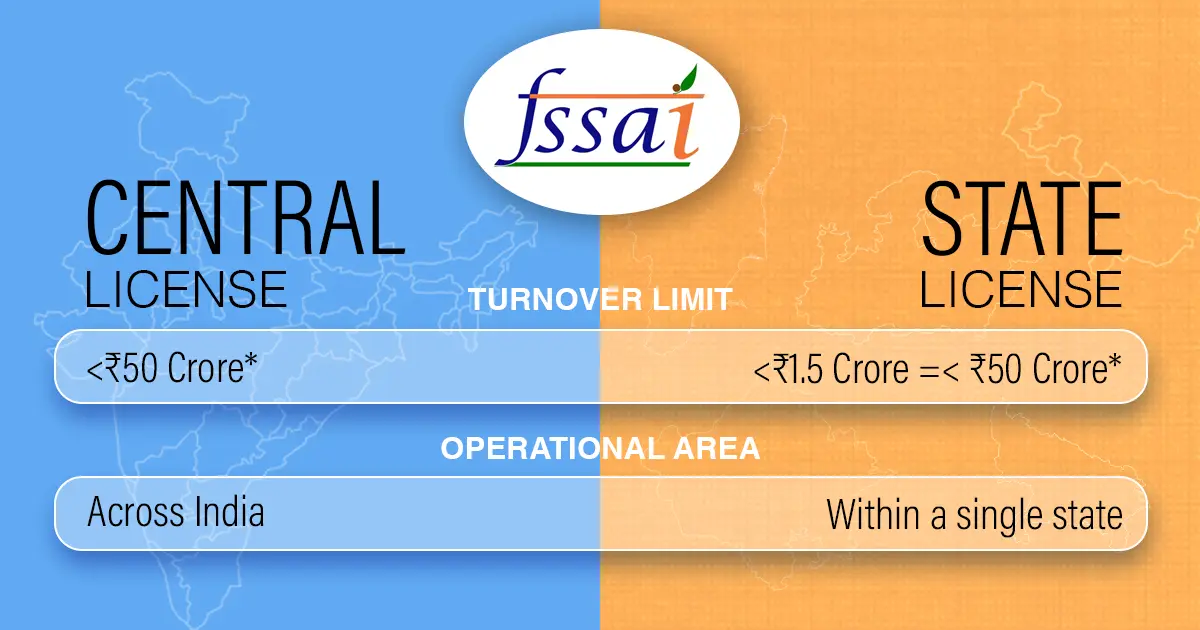
FBOs with an annual turnover between ₹12 lakh and ₹20 crore must apply for a State License. This category covers most medium-sized restaurants, large canteens, medium manufacturers, and distributors operating only within the state of Maharashtra.
- Issuing Authority: The Commissioner of Food Safety for Maharashtra grants this License.
- Form: Apply using Form B on the FoSCoS portal.
Example: A restaurant chain in Mumbai with multiple outlets and an annual turnover of ₹5 crores must apply for a State FSSAI License.
3. Central License – For Large Businesses, Import/Export, or Multi-State Operations
This License is mandatory for large FBOs with an annual turnover exceeding ₹20 crore. It is also essential for any business involved in import/export, operating in multiple states, or having units in central government establishments (like railways, ports, or airports) in Mumbai.
- Issuing Authority: The Central Licensing Authority of FSSAI issues the License.
- Form: Apply using Form B on the FoSCoS portal.
Example: A large FMCG manufacturing unit in Mumbai producing packaged foods, exporting to other countries, and earning above ₹50 crores annually must hold a Central FSSAI License.
Documents Required for FSSAI License Registration in Mumbai
To obtain a food license in Mumbai, you must provide a specific set of documents to the FSSAI that verify your business identity, premises, and commitment to food safety. The exact list varies slightly depending on whether you apply for Basic Registration, a State License, or a Central License.
Here’s the complete list of key documents needed for FSSAI registration online in Mumbai:
-
Passport-Size Photos and ID Proof of the Owner
Submit the following documents:
-
- Recent passport-size photograph of the proprietor, partner, or authorized signatory
- Government-issued Photo ID (Aadhaar Card, Voter ID, or Driving License)
- Address proof of the authorized person.
-
Proof of Business Address (electricity bill, rent agreement)
Documentation proving legal possession of the business premises is essential. You can submit documents such as a Sale Deed, Rent Agreement (along with a No Objection Certificate from the landlord), or a copy of the latest Utility Bill (e.g., Electricity Bill, Water Bill) that is not older than two months.
-
Business Registration Proof (GST, partnership deed, etc.)
Provide legal proof of your business constitution. This includes:
-
- Proprietorship: Declaration/Affidavit of Proprietorship
- Partnership Firm: Partnership Deed
- Company (Pvt Ltd/LLP): Certificate of Incorporation, Memorandum of Association (MoA), and Articles of Association (AoA)
- For higher Licenses: A copy of the GST Registration Certificate may also be required
-
Food Safety Management Plan
For State and Central Licenses, FBOs must submit a Food Safety Management System (FSMS) Plan or certificate. This document outlines the procedures and methods the business employs to ensure food safety and quality as per FSSAI regulations. Small businesses applying for Basic Registration can provide a simple declaration or undertaking.
-
NOC from the Local Municipality or the Health Department in Mumbai
Certain businesses, especially those within municipal limits or operating as manufacturing units, must obtain a No Objection Certificate (NOC). The local municipality or health department in Mumbai issues this NOC. It verifies the commercial nature of the premises and ensures compliance with hygiene and safety standards.
-
Additional Documents
Additional documents required for the State/Central License are:
-
- List of food products you plan to manufacture or sell
- Layout plan or blueprint of the food processing unit (for manufacturers)
- List of machinery and equipment used in production
- Water testing report from an approved lab (if water is used in food preparation)
- Proof of annual turnover (to determine license type)
- Import Export Code (IEC) License if the business deals in imported or exported food items
- Employee list with medical fitness certificates (for larger food units)
- Declaration Form B signed by the proprietor or partner
Note: Certain local bodies in Maharashtra, including the Greater Mumbai Corporation, may require a separate Shop and Establishment License, Pollution and Fire Department NOC, or a Trade License before or during the FSSAI licensing process. You must secure this additional local compliance, as the FSSAI authorities may check for it.
Ensuring all FSSAI license documents are complete and accurate is essential for a smooth registration process. Ensure to check out the detailed list in the linked blog for better understanding and accuracy.
How to Get an FSSAI License in Mumbai?
Obtaining an FSSAI License in Mumbai involves a structured process that you execute primarily through the FSSAI’s online portal, FoSCoS. Follow these practical steps to obtain an FSSAI License in Mumbai.
Step 1: Identify the Correct License Type
The food business operator first identifies the right type of license based on the annual turnover and business scale.
- Basic Registration: For turnover below ₹12 lakh.
- State License: For turnover between ₹12 lakh and ₹20 crore.
- Central License: For turnover above ₹20 crore or inter-state operations.
Step 2: Collect the Required Documents
The applicant should prepare all essential documents before applying. Refer to the “Documents Required for FSSAI Registration in Mumbai” section for more details.
Step 3: File the Application Online
Submit the application on the FoSCoS portal (foscos.FSSAI.gov.in).
- Form A is used for Basic Registration.
- Form B is used for State and Central Licenses.
All necessary documents are uploaded, and the prescribed government fee is paid online.
Step 4: Application Review and Inspection
Once submitted, the Food Safety Officer (FSO) reviews the application.
- For higher-level licenses, an inspection may take place to ensure hygiene and infrastructure standards.
- The officer verifies details and ensures compliance with all safety norms.
Step 5: Approval and License Issuance
If the application meets all standards, the authority approves it.
- The applicant receives a 14-digit FSSAI License number and a digital certificate.
- The certificate must be displayed clearly at the business premises.
Step 6: Begin Legal Food Operations
After receiving the license, the business can legally start food operations in Mumbai.
- The FSSAI number must be printed on all food packages, labels, and invoices.
- Regular compliance and timely renewal ensure uninterrupted business operations.
For fast, accurate, and hassle-free FSSAI registration in Mumbai, contact RegisterKaro today to handle your documentation, filing, and approval process efficiently.
FSSAI Registration Fees in Mumbai
The official government FSSAI registration fees in Mumbai depend entirely on the type of license, the category of the food business, and the validity period (ranging from 1 to 5 years) you choose. Here’s a detailed breakdown:
Basic Registration Fee:
- ₹100 per year for small food businesses (valid for 5 years). This is the minimum FSSAI license cost in Mumbai for the smallest FBOs.
State License Fees:
- Small businesses (e.g., small manufacturers or mid-sized distributors): ₹2,000 per year.
- Medium businesses (e.g., medium restaurants): ₹3,000 per year.
- Large businesses (e.g., high-turnover processors): ₹5,000 per year.
Central License Fees:
- Manufacturer (general): ₹7,500 per year.
- Large manufacturer: ₹15,000 per year.
- Importer: ₹10,000 per year.
- Large food retailer: ₹7,500 per year.
Note: The FSSAI license fees listed above reflect standard government charges. However, actual costs may vary slightly depending on local food authority regulations or specific inspection requirements.
Additional Costs:
The total cost includes the professional service charges of the FSSAI registration consultant in Mumbai for documentation, filing, and follow-up.
- Application processing fees (part of professional charges).
- Inspection fees (if applicable, charged by the authority).
- Testing and certification costs (if product sample testing is requested).
Penalties for Non-Compliance With FSSAI Regulations
Operating a food business in Mumbai without a valid FSSAI license is a punishable offense under the Food Safety and Standards Act, 2006, as per Sections 50–67 of the Act. The law imposes stringent penalties for non-compliance, which the operator must meticulously avoid.
Operating without a valid FSSAI registration can result in:
- Monetary penalties up to ₹5 lakh (Section 63 of the FSS Act).
- Imprisonment up to 6 months (Section 63 of the FSS Act).
- Business closure orders issued by the Designated Officer.
- Product seizure and destruction of food articles and raw materials found at the premises.
- Criminal prosecution for serious violations, such as the sale of substandard food (penalty up to ₹5 lakh).
Renewal and Modification of FSSAI License in Mumbai
Maintaining an active and accurate FSSAI license is a continuous obligation. Businesses must manage both renewal and modification correctly to ensure uninterrupted legal operation.
1. Renewal Required Every 1–5 Years Before Expiry
The FSSAI license or registration is valid for a period chosen by the applicant, ranging from one year to a maximum of five years. The FBO must apply for renewal at least 30 days before the license expires. The FoSCoS portal facilitates this renewal application.
If not done within 30 days:
A late fee of ₹100 per day applies after the expiry date until renewal. If the renewal application is not filed within 90 days after expiry, the license automatically expires, and the business must apply for a fresh license.
Timely FSSAI license renewal ensures uninterrupted operations, legal compliance, and continued trust with customers across Maharashtra’s food industry. Contact RegisterKaro to be compliant with legal authorities.
2. Apply for Modification If Address, Business Type, or Capacity Changes
Food businesses must notify the FSSAI of any major changes by applying for a license modification. This is essential when the FBO:
- Changes the physical address of the food unit (For example, if a business moves from Mumbai to Thane, it must apply for modification and re-verification)
- Increases the production capacity significantly.
- Adds or deletes a major food category.
- Changes the nature of the business or ownership structure.
3. Penalties for Non-Compliance in Mumbai
Beyond operating without a license, other violations of the FSS Act, 2006, carry significant penalties:
-
Fine for Operating Without FSSAI License (up to ₹5 lakh)
Section 63 of the FSS Act clearly outlines the punishment for running a food business without the required registration or license.
-
Product Seizure or Business Closure by Authority
Authorities possess the power to seize any food stock, machinery, or equipment and issue closure notices for unhygienic conditions or the sale of substandard food.
-
Legal Consequences and Cancellation of License
Repeated offenses lead to the suspension or permanent cancellation of the FSSAI license, along with potential criminal liability for the business owners under various sections of the Act.
Why FSSAI Registration is Important for Food Businesses in Mumbai?
Obtaining FSSAI registration in Mumbai is more than a legal formality; it is a strategic business decision that fosters sustainable growth and protects the brand.
-
Legal Recognition to Operate a Food Business
The license grants the legal right to manufacture, store, distribute, and sell food in India, protecting the business from immediate closure or fines by the Maharashtra FDA.
-
Enhances Goodwill and Customer Confidence
The visible FSSAI logo provides an instant signal to the consumer, promoting trust and assurance of quality. This goodwill is critical for brand loyalty in a hyper-competitive market like Mumbai.
-
Makes Expansion and Funding Easier
Investors, banks, and potential business partners view FSSAI compliance as a key indicator of a professional and responsible business operation. The license streamlines the process for securing loans or scaling to new locations.
-
Enables Listing on Swiggy, Zomato, and Other Marketplaces
Online aggregators make FSSAI registration mandatory for all restaurants and cloud kitchens. The license is a gate pass for leveraging the massive digital food delivery market in Mumbai.
-
Ensures Long-Term Sustainability of Your Food Business
Compliance enforces hygiene and quality control practices, which translate directly into better products, fewer recalls, and a sustainable business model that meets evolving legal standards.
Food License for Popular Businesses in Mumbai
The required food license in Mumbai varies depending on the type of operation, but the legal obligation remains constant.
-
FSSAI for Restaurants and Cafes in Mumbai
A standalone restaurant in Colaba or a multi-cuisine cafe chain requires a State FSSAI License (or Central if turnover is very high). They must demonstrate compliance with strict hygiene codes, kitchen infrastructure, and ingredient sourcing rules.
-
FSSAI for Home-Based Food Businesses and Tiffin Services
Home chefs and dabbawala services, integral to Mumbai’s food culture, must obtain the Basic FSSAI Registration. This simple step ensures that even small-scale food preparation adheres to minimum safety standards, which is especially important for the large tiffin service network.
-
FSSAI for Cloud Kitchens and Food Delivery Outlets
As per industry trends, cloud kitchens are a major growth sector. These delivery-only units must obtain the appropriate State FSSAI License for their registered premises. A single cloud kitchen unit in Bandra serving multiple brands needs a single license covering all food categories.
-
FSSAI for Food Manufacturers and Distributors in Mumbai
A large spice distributor operating out of Vashi or a seafood processing unit near Mumbai Port must obtain a Central FSSAI License if it exceeds the ₹20 crore turnover limit or engages in exports. Smaller manufacturers require the State License based on their production capacity.
FSSAI Registration Office in Mumbai
FBOs can contact the local state authority for assistance with State and Basic FSSAI registration in Mumbai matters.
State FSSAI or Food Safety Commissioner’s Office
The regulatory body in Maharashtra is the Food and Drug Administration (FDA).
- Office Address (FDA Mumbai, Headquarters): Commissioner, Food and Drug Administration, 2nd Floor, Survey No. 341, Bandra Kurla Complex, Opposite Reserve Bank, Bandra (East), Mumbai – 400051.
- Central FSSAI Western Region Office: Food Safety and Standards Authority of India, Western Region Office, Unit No. 1202, 12th Floor, Hallmark Business Plaza, Opposite Guru Nanak Hospital, Bandra East, Mumbai 400051.
Working Hours, Helpdesk, or Online Grievance Link
FBOs typically access support through the FoSCoS portal helpdesk (National FSSAI number: 1800-11-2100). The FDA offices generally operate during standard government working hours (e.g., Monday to Friday, 10:00 AM to 5:00 PM).
Note on Physical Inspection or Visit Requirement in Mumbai
While small Basic Registrations often rely solely on document submission, the State and Central FSSAI License applications usually require more scrutiny. This is especially true for manufacturers, large warehouses, and hotels in the Mumbai region, where a mandatory on-site inspection by a Food Safety Officer is conducted. This inspection confirms compliance with the reported hygiene and infrastructure standards.
Connect with RegisterKaro and let our experts handle the legal hassle while you grow your business.
Frequently Asked Questions (FAQs)
How to get an FSSAI license in Mumbai?
To obtain an FSSAI license in Mumbai, determine the appropriate license type (Basic, State, or Central) based on your annual turnover. Gather all necessary documents like ID proof, address proof, and the Food Safety Management System plan. File the complete application online through the official FoSCoS portal. The Maharashtra FDA then verifies the submission and issues the digital license after successful review or inspection.
What documents are required for FSSAI registration in Mumbai?
For FSSAI License registration in Mumbai, you will need the following documents:
- A photo ID of the applicant (Aadhaar/PAN)
- Proof of business premises (rent agreement/electricity bill)
- Food Safety Management Plan
- Business constitution proof (Partnership Deed/Certificate of Incorporation)
- For State and Central licenses, a layout plan of the unit and an NOC from the local municipality may also be required.
How long does it take to get the FSSAI license in Mumbai?
The processing time for an FSSAI license in Mumbai generally takes between 7 to 45 working days. The duration depends primarily on the complexity of the license type. Basic Registration is faster, while State and Central Licenses take longer due to thorough verification by the Food Safety Officer and potential on-site inspection of the unit.
Is online food business registration different in Mumbai?
No, the core FSSAI online registration Mumbai process uses the national FoSCoS portal, which is uniform across India. However, the local Maharashtra FDA reviews applications. They may demand additional local documents, such as a trade license from the Brihanmumbai Municipal Corporation (BMC), making the compliance requirement slightly specific to the Mumbai region.
How can RegisterKaro help me with FSSAI renewal in Mumbai?
RegisterKaro assists with FSSAI license renewal in Mumbai by proactively reminding the FBO well before the 30-day renewal deadline. The team manages the digital application on FoSCoS, prepares any necessary updated documents, and ensures timely fee payment, including managing the communication with the State Authority to prevent late fees or lapse of the license.
Can I upgrade my basic registration to a state license in Mumbai?
Yes, a food business in Mumbai must upgrade its Basic Registration to a State License when its annual turnover exceeds ₹12 lakh. The FBO files a modification application on the FoSCoS portal, submits the updated documents and turnover proof, and pays the higher State License fee to complete the mandatory upgrade process.
Do home bakers in Mumbai need FSSAI registration?
Yes, home bakers, even those operating on a small scale, must obtain an FSSAI registration in Mumbai. They typically qualify for the Basic FSSAI Registration, provided their annual turnover remains below ₹12 lakh. This compliance ensures they meet minimum hygiene standards and can legally sell products online or offline.
Do I need a separate FSSAI license for each outlet in Mumbai?
Yes, the FSSAI mandates that every distinct physical location or unit of a food business in Mumbai (e.g., a restaurant chain branch, a separate cloud kitchen unit, or a new warehouse) must have its own separate, valid FSSAI license. This allows the local food safety authority to conduct accurate, location-specific inspections and monitoring.
What happens if I don’t get an FSSAI license in Mumbai?
Operating a food business without a valid license in Mumbai constitutes a legal violation under the FSS Act, 2006. Authorities can impose a hefty penalty of up to ₹5 lakh, seize all food products, and issue an immediate business closure order. The lack of registration also prevents the business from listing on major food delivery platforms.
How to check the FSSAI license status or verify it in Mumbai?
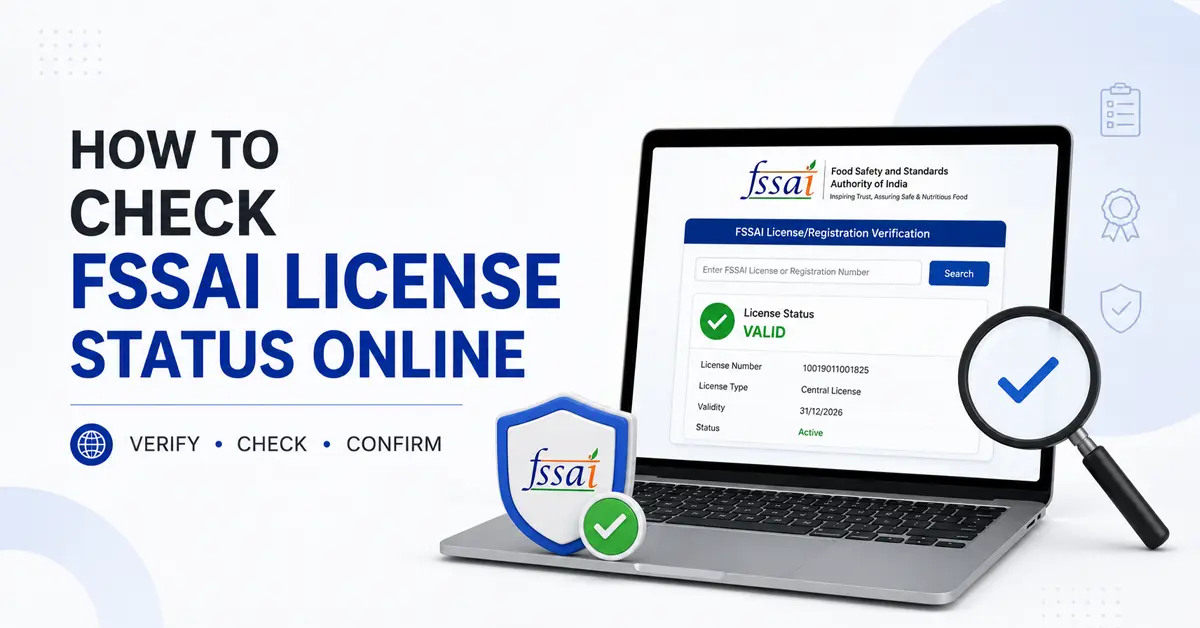
You can check the status of your FSSAI License or verify an existing one by visiting the official FoSCoS portal. Use the 17-digit application reference number to track the status, and consumers can verify an FBO's 14-digit FSSAI license number to confirm compliance in Mumbai.

Reviewed by
Joel DsouzaJoel Dsouza is a Chartered Accountant (CA) and compliance expert with over 7 years of hands-on experience in company registration, tax structuring, GST, ROC filings, and MCA compliance. As a qualified member of the Institute of Chartered Accountants of India (ICAI) and Co-Founder at RegisterKaro, he has personally advised more than 1,000 startups and SMEs across India, helping founders navigate incorporation, regulatory frameworks, and financial planning from Day 1. With deep expertise across all three levels of Finance and Portfolio Management, Joel is committed to promoting financial literacy and simplifying India's startup ecosystem through clear, actionable guidance that entrepreneurs can act on immediately.
Why Choose RegisterKaro for FSSAI License Registration in Mumbai?
Choosing a reliable partner for FSSAI registration in Mumbai ensures a seamless, efficient process with no complications. We simplify complex food safety regulations for all food business operators (FBOs).
- Expert Guidance from Professionals: Our team stays up-to-date with the latest food safety regulations in Mumbai, helping you avoid delays and errors in the application process.
- Effortless Online Process with Fast Turnaround: We manage the entire FSSAI registration process, from document collection to submitting your application on the FoSCoS portal. We ensure quick approval, allowing you to start operations without delay.
- Clear Pricing, No Hidden Fees: We offer transparent pricing with no surprises. All costs, including government fees and professional charges, are communicated upfront, ensuring you have a clear understanding of the total expense.
- Local Support for Document Collection and Filing: Our team provides hands-on assistance in collecting and verifying necessary documents, such as proof of business address and municipal NOCs, to streamline the compliance process.
- Continuous Support for Renewal and Compliance: Our support doesn't end with registration. We offer 24/7 assistance for renewals, modifications, and annual filings, ensuring your business stays compliant at all times.

What Our Clients Say
View All
Prem Kumar
 Verified
I had an outstanding experience with RegisterKaro, especially with Chinmay, who assisted me with my FSSAI registration. He was extremely professional,... Read more

Jamal Sindhi
VerifiedThank you so much for your exceptional service! Every document was prepared flawlessly and delivered right on time. Your professionalism and attention... Read more

Dheeraj Kumar
VerifiedGreat experience with RegisterKaro! The entire incorporation process was handled professionally. Special appreciation to Vandana for her prompt assist... Read more

Lee Merina
VerifiedI had a very positive experience with Sakshi and Team services. The team was professional, responsive, and handled everything with great care and effi... Read more

Karthik Prabhu
VerifiedI have had an excellent service with Register Karo. They are very diligent in their processes, and they have been sincere in completing every task req... Read more

Prachi Goel
VerifiedI am extremely satisfied with the professional services provided by Ms. Divya Aghrawat from Team RegisterKaro. She has been handling my incorporation... Read more

Sangita Paul
VerifiedThe support I received was honest, practical, and timely. There were no unrealistic promises—just clear communication and dependable execution. Exactl... Read more

Rajender Singh
VerifiedVery Helpful and Responsible team at Register karo, Last i have registered companies from another Service provider but This Time i have used Services... Read more

Suvojit Shome
VerifiedI’m very pleased with the overall service experience. The team was proactive, well-organized, and maintained clear communication throughout the proces... Read more

Dr. Amaresh Jha
VerifiedIt was a great experience registering my new company with RegisterKaro team. Aditi in particular was very instrumental in collecting and processing th... Read more
FSSAI Registration in Other Cities of Maharashtra
Other Business Services in Mumbai
Related Blogs
View All
How to Start a Masala Business in India?

FSSAI License for Packaged Drinking Water: Fees & Rules

FSSAI License Fees in India: Cost, Types & How to Save

Roles & Responsibilities of FBOs (Food Business Operators) in India

FSSAI Regulations for Nutraceuticals in India
Foods Banned by FSSAI in India: Complete List
Difference Between FSSAI State and Central License in India

FSSAI Offences and Penalties in India: Fines and Punishments for Food Businesses
Documents Required for FSSAI License & Registration (2026)
How to Check FSSAI License Status Online on FoSCoS Portal?